

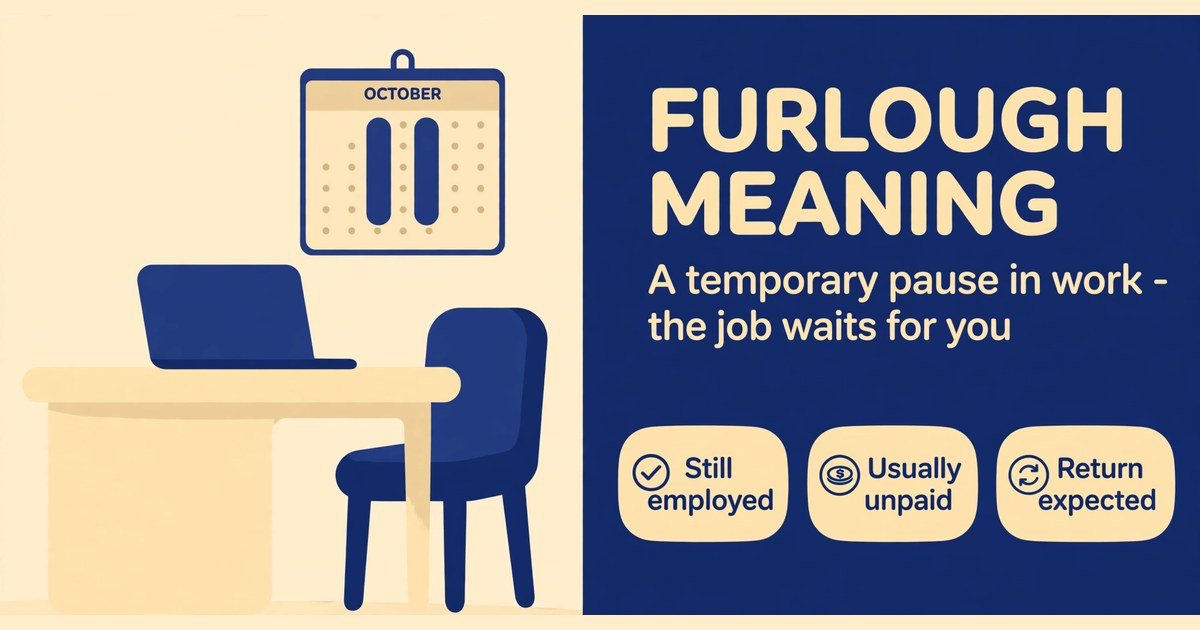
Your manager calls a meeting and announces a company-wide furlough. The furlough meaning is simpler than the worried faces suggest: a furlough is a temporary break from work, and the job still waits for you at the end. In most cases, the break is unpaid, or it cuts your hours and pay for a while. In short, you stay employed, but you pause the work and the wages together.
This guide explains the furlough meaning in plain words first. Next, it uncovers the word’s Dutch roots and its military past. Then, it explains how to pronounce furlough and when employers actually use one. After that, it compares furloughs with layoffs and paid leave, and revisits the famous UK scheme. By the end, you will read any furlough headline with confidence.
The word appears in headlines about airlines, hotels, and governments alike. Each headline, however, carries the same hopeful core: the separation is temporary. Once you grasp that core, a scary announcement becomes a manageable plan instead.
Furlough Meaning in Plain Words
Merriam-Webster defines a furlough as a leave of absence from duty, especially one granted to a soldier. In modern workplace use, the furlough meaning is a temporary, employer-ordered pause in work. The employee keeps the job, the title, and usually the workplace benefits. However, the employee stops working during the pause and normally stops receiving pay. As a result, a furlough sits between normal work and losing the job entirely.
Employers use furloughs as a pressure valve during hard times. First, the company cuts its wage bill quickly. In addition, it keeps trained staff ready for the recovery. For example, a hotel may furlough staff during a quiet season and recall everyone in spring. Overall, the arrangement trades short-term pain for long-term stability.
The word also works as a verb, and news reports use it often. Employers furlough workers, and workers then describe themselves as furloughed. In addition, the term covers both full pauses and partial ones. Some schemes, for example, cut whole weeks, while others remove a day here and there. Overall, the employment link survives the pause in both forms.
Where the Word Furlough Comes From
The word furlough comes from the Dutch word verlof, which means permission or leave of absence. Dutch speakers built verlof from parts meaning for and permission. English borrowed the word in the early 1600s, and writers first recorded it around 1631. At first, a furlough meant official permission for a soldier to leave duty for a set period. The soldier carried papers that proved the leave, and the furlough kept him legally employed.
Later, the word travelled far beyond the army. Railways, factories, and offices adopted it for temporary staff leave during slow periods. During the twentieth century, American employers gave it the modern cost-cutting sense. Word origins often hide such journeys; the serendipity meaning, for instance, traces back to a Persian fairy tale. Similarly, furlough carries four centuries of leave-taking inside one short word.
The Dutch connection, in addition, explains the strange spelling. English writers first tried forms like furloff and furlogh before furlough won. The -ough ending echoes dough, although the sounds differ. Over time, the spelling settled, and eventually the pronunciation settled too. In short, the odd letters carry the word’s Dutch passport.
How to Pronounce Furlough
People often stumble over the spelling, but the pronunciation is friendly. Say FUR-loh: two syllables, with the stress on the first one. The first part rhymes with fur, and the second part sounds like low. In phonetic form, dictionaries write it as ˈfər-lō. Meanwhile, the spelling follows the Dutch original loosely, which explains the odd -ough ending. In short, if you can say fur and low, you can say furlough.
One more tip helps as well: stress the first syllable, never the second. FUR-loh sounds natural; fur-LOH, by contrast, sounds wrong to native ears. Then practise the word inside a full sentence, and it sticks quickly.
When Do Employers Use a Furlough?
Employers reach for furloughs in a few clear situations. First, a company in financial trouble furloughs staff instead of firing them. The move cuts costs today and preserves skills for tomorrow. Next, seasonal businesses use furloughs during predictable slow months. Ski resorts, holiday parks, and exam-marking firms all face quiet stretches each year.
Governments form the second big case. When the United States Congress misses a funding deadline, federal agencies send non-essential staff home on furlough. Those workers return as soon as funding passes. Meanwhile, the military still uses furlough in its older sense: approved leave for service members. Missionaries and aid workers also take long furloughs between postings abroad. Overall, the pattern is the same everywhere: a pause, not an ending.
Private companies, similarly, furlough staff during sudden shocks. Airlines, for example, grounded fleets during travel bans, and hotels emptied during crises. In each case, demand vanished overnight; however, employers expected it back. A furlough, as a result, bridges exactly that gap. In short, it keeps the team intact until customers return.
Furlough Meaning vs Layoff vs Paid Leave
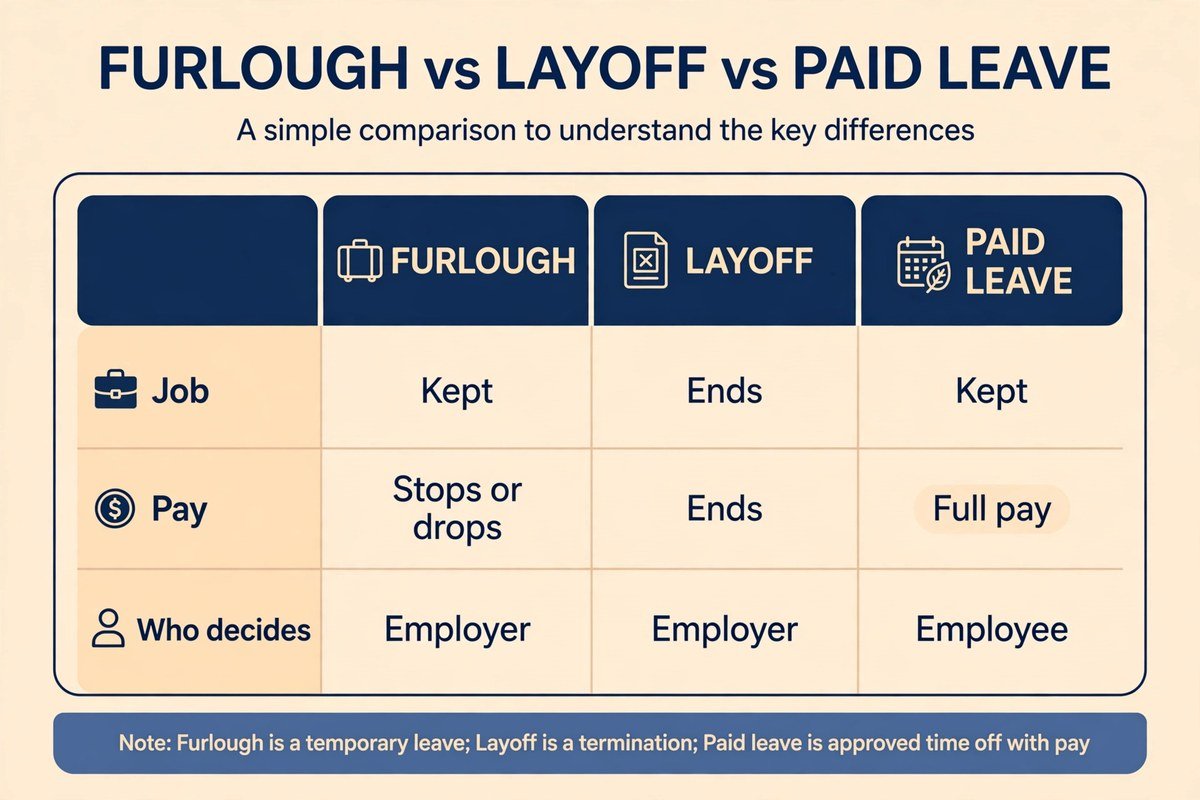
Three terms cause endless confusion in workplace news, so a clear comparison helps. The furlough meaning differs from a layoff in one crucial way: the job survives. It also differs from paid leave, because the employer orders the break and the pay usually stops. The two comparisons below separate all three ideas.
Furlough vs Layoff
A layoff ends the employment relationship, at least in practice. The worker loses the job, the income, and usually the benefits on the same day. A furlough, by contrast, keeps the relationship alive during the pause. The employer expects the worker back and often sets a recall date. As a result, furloughed staff rarely receive severance pay, while laid-off staff sometimes do.
Recall rights, in fact, underline the gap between the two. Furloughed workers usually return to their exact roles afterwards. Laid-off workers, by contrast, must apply again, and often the role no longer exists.
Furlough vs Paid Leave
Paid leave, such as holiday or vacation time, belongs to the employee. The worker chooses the dates and receives full pay throughout. A furlough belongs to the employer instead. The employer chooses the dates, and the pay normally stops or drops. In short, paid leave is a benefit you spend; a furlough is a cost the company shares with you.
Timing, similarly, reveals the same contrast clearly. Paid leave refreshes a worker and benefits the employer later. A furlough, instead, protects cash today and asks the worker to carry the cost.
The UK Furlough Scheme: A Famous Example
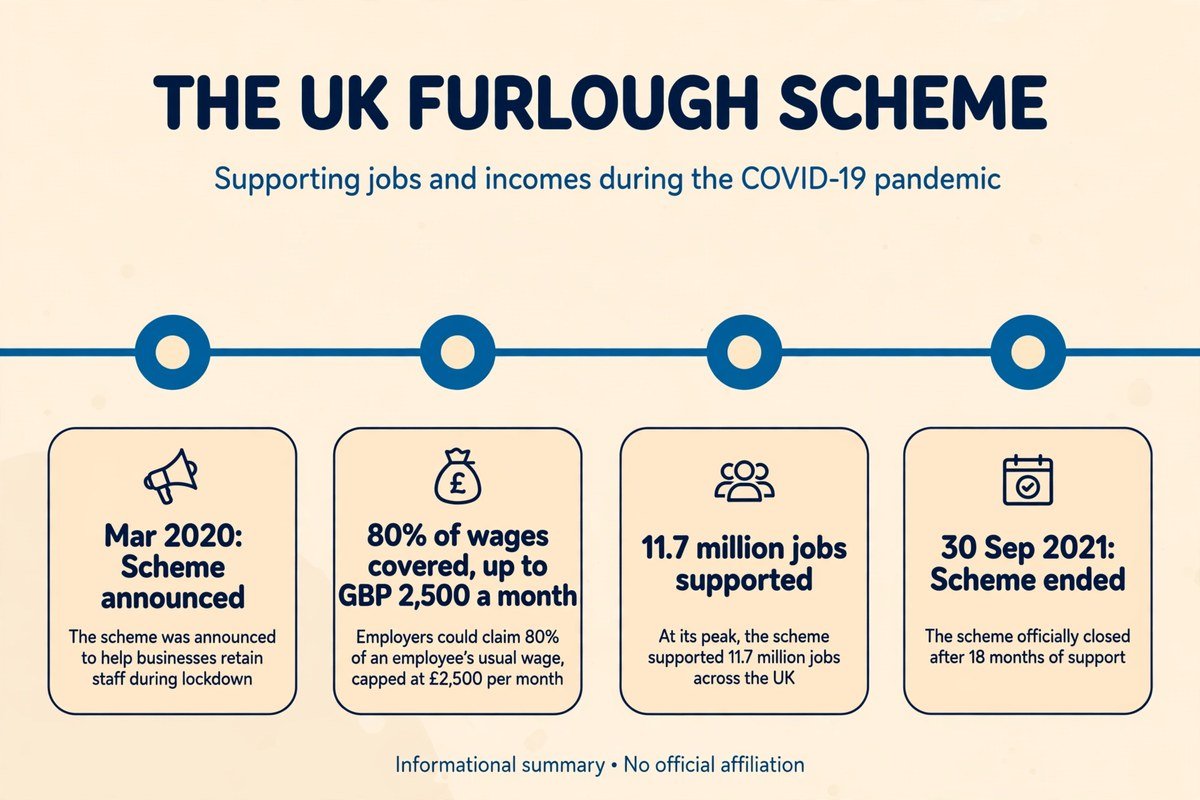
One scheme taught the whole world this word in a single year. In March 2020, during the COVID-19 pandemic, the UK government launched the Coronavirus Job Retention Scheme. Chancellor Rishi Sunak announced the plan on 20 March 2020. Under the scheme, the government paid grants covering 80 percent of a furloughed worker’s wages. A monthly cap of £2,500 per person applied.
The scheme ran from March 2020 until 30 September 2021. In total, it supported 11.7 million jobs across the country. Official figures put the final cost at about £70 billion. Restaurants, airlines, shops, and theatres used it heavily during lockdowns. As a result, millions of workers kept their jobs through the crisis. The episode fixed the word furlough in British everyday speech.
From July 2020, the scheme also allowed flexible furlough. Staff could work part of the week and claim support for the remaining hours, for example. That flexibility, in addition, helped cafes and shops reopen gradually after lockdowns. Employers claimed grants through the tax system, and workers stayed on the payroll throughout.
What Happens to Pay and Benefits on Furlough?
Pay is the painful part, because most furloughs are unpaid. If your employer cuts your hours instead, your pay usually falls in proportion. For example, a four-day week under furlough often means roughly four-fifths of normal pay. Some employers top up wages voluntarily, but no general rule forces them to. Meanwhile, the job itself, your start date, and your seniority normally stay intact.
Benefits often continue during a furlough, especially health cover under employer plans. Pension contributions, however, may pause or shrink with the reduced pay; schemes differ. American federal workers hold one special protection: a 2019 law guarantees them back pay after a shutdown ends. Private-sector workers lack that guarantee and rely on their employer’s policy. Overall, always read the furlough letter carefully, because it sets out your exact terms.
Furlough letters usually confirm the key points in writing. They state the start date, the expected length, and the pay arrangement, for instance. Keep the letter safe, because benefit claims often require it. If terms change mid-furlough, a careful employer confirms the update in writing too.
Furlough Meaning in Everyday Sentences
Example sentences fix the furlough meaning in your memory better than any definition. Read the sentences below and notice the pattern in each one.
- The airline placed fifty pilots on furlough during the quiet winter season.
- Our office closes every Friday this month because of a rolling furlough.
- After six weeks on furlough, Maria finally returned to her desk.
- The governor announced a two-day furlough for state workers to save money.
- He spent his army furlough visiting family in his home town.
- The museum furloughed its guides until the spring season opened.
- During the shutdown, thousands of federal workers sat at home on furlough.
Notice how every sentence pairs a pause with a planned return. That pairing is the heart of the word. In contrast, sentences about layoffs point to endings and goodbyes. In short, if the job waits at the end, the word is furlough.
FAQ’s
Can you take another job while on furlough?
Often yes, but your contract decides the answer. Some employers allow outside work freely, while others require written permission first. During the UK scheme, workers could take a second job if their contract allowed it. Always check your furlough letter before you sign anything new.
Can you claim unemployment benefits while on furlough?
In many places, yes. Several US states let furloughed workers claim unemployment insurance, including for partial hours cuts. Rules, waiting periods, and amounts vary widely by state and country, though. Your local benefits office gives the only answer that counts for you.
How long does a furlough last?
A furlough has no fixed length, because the employer sets it around the cause. Some last a few days; others run for several months during a long crisis. Government shutdown furloughs end when funding returns. Your notice should state an expected end date or review date.
What is a furlough day?
A furlough day is a single unpaid day off inside a normal working schedule. Employers spread these days across weeks or months to soften the pay cut. For example, one furlough day per month trims wages gently. The arrangement also keeps every service running, just slightly slower.
Can an employer furlough only some employees?
Yes, employers commonly furlough one department or shift rather than the whole company. Managers usually base the choice on workload and business need. However, selection must follow contracts and equality law in most countries. If a choice looks unfair, an employment adviser can review it.
Conclusion
The furlough meaning describes a pause in work, not the end of a job. An employee stays on the books, the pay usually stops, and both sides plan for a return. That simple design explains the word’s journey from Dutch army leave to modern offices, factories, and government departments. Its Dutch root even means permission, which fits the idea of approved leave perfectly.
Once you separate furloughs from layoffs and paid leave, workplace news becomes far easier to follow. Remember the UK scheme, and you also remember the scale a furlough can reach: millions of jobs at once. Keep that picture in mind, and the next furlough headline will read clearly from the first line. In short, the job waits, the wages pause, and the story continues.


Leave a Comment