

Four short letters appear in countless health searches every day. The pcos meaning is worth learning properly, because the condition is common and widely misunderstood. In plain words, PCOS is a hormone condition that affects how the ovaries work. It can change periods, skin, hair, weight, and fertility. This guide explains the pcos meaning from the ground up, in clear and calm language.
First, you will learn what PCOS stands for and what happens in the body. Next, you will see the main symptoms and the known causes. Then, you will learn how doctors diagnose it and how people manage it. Finally, a short note: this page explains the term for general knowledge. It is not medical advice, and a doctor should guide any personal decision.
PCOS Meaning in Plain Words
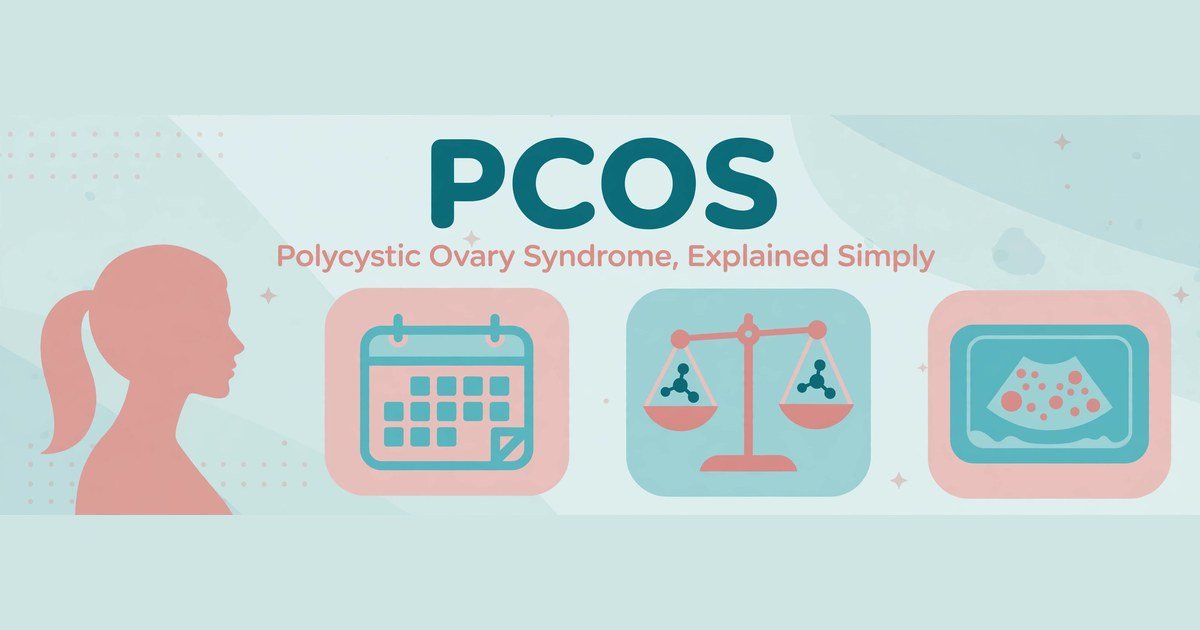
PCOS stands for polycystic ovary syndrome. It is a long-term hormone condition that affects women mainly during their reproductive years. Doctors describe it as one of the most common hormone conditions in that age group. Estimates often say about one in ten women has it. Many women, however, never receive a diagnosis at all.
The condition centres on two linked problems. First, the hormone balance shifts, and the ovaries may release eggs irregularly or not at all. Second, the body may produce higher levels of androgens, the so-called male hormones that women also make in small amounts. As a result, periods can space out, stop, or arrive without warning. Skin, hair, and weight often change at the same time.
In short, the pcos meaning is not a single symptom. It is a pattern of hormone changes with wide effects. That is also why two women with PCOS can look quite different. One may struggle mainly with acne and irregular cycles. Another may notice excess hair and trouble conceiving instead.
PCOS Meaning at a Glance
The quick facts below give you the whole picture in seconds. Read them first if you only need the short answer.
- Full name: polycystic ovary syndrome
- Who it affects: women, mostly in their teens to forties
- Main features: irregular periods, extra androgens, and many small follicles on the ovaries
- Exact cause: unknown, with insulin and family history both involved
- Cure: none yet, but symptoms can be managed well
- First step: a doctor’s visit, with blood tests and often a scan
Those facts already answer most casual searches. The sections below, meanwhile, explain each point properly. Understanding the pattern helps you read any report or article about the condition.
What Are the Main Symptoms of PCOS?
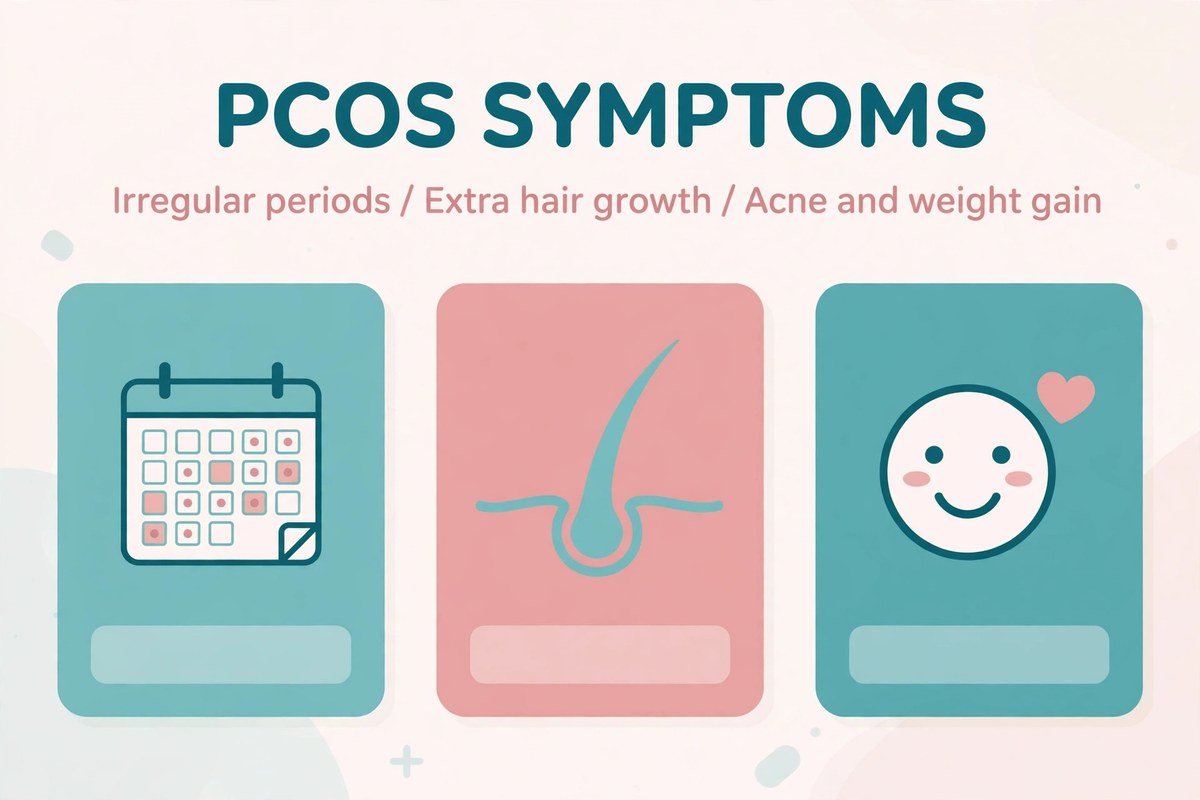
Symptoms usually appear in the late teens or early twenties. They can stay mild for years, or they can arrive strongly and quickly. The NHS guide to PCOS lists the signs below as the typical set.
- Irregular or absent periods. Cycles grow long, skip months, or stop entirely.
- Difficulty getting pregnant. Irregular egg release makes timing conception harder.
- Excess hair growth. Hair may thicken on the face, chest, back, or stomach.
- Weight gain. Many women gain weight easily and lose it slowly.
- Thinning hair. Hair on the scalp may thin, especially near the front.
- Oily skin and acne. Breakouts can persist well beyond the teenage years.
Not every woman gets every sign. Some women, in fact, notice only one or two of them. Severity also changes over time and with body weight. For that reason, doctors look at the whole pattern rather than one clue.
What Causes PCOS?
The exact cause remains unknown. Researchers, however, agree on several strong drivers. Together, they explain most cases doctors see.
Insulin Resistance
Insulin is the hormone that moves sugar from the blood into the cells. In insulin resistance, the cells answer insulin poorly. The body then makes even more insulin to compensate. High insulin, in turn, pushes the ovaries to make extra androgens. That chain explains both the hormone shift and much of the weight gain.
Hormone Imbalance and Family History
Women with PCOS often show higher androgen levels than usual. Their other hormones can drift out of balance as well. Genes clearly play a role, too. PCOS tends to run in families, so a mother or sister with the condition raises the odds. Low-grade inflammation may add to the picture, although research continues.
How Doctors Diagnose PCOS
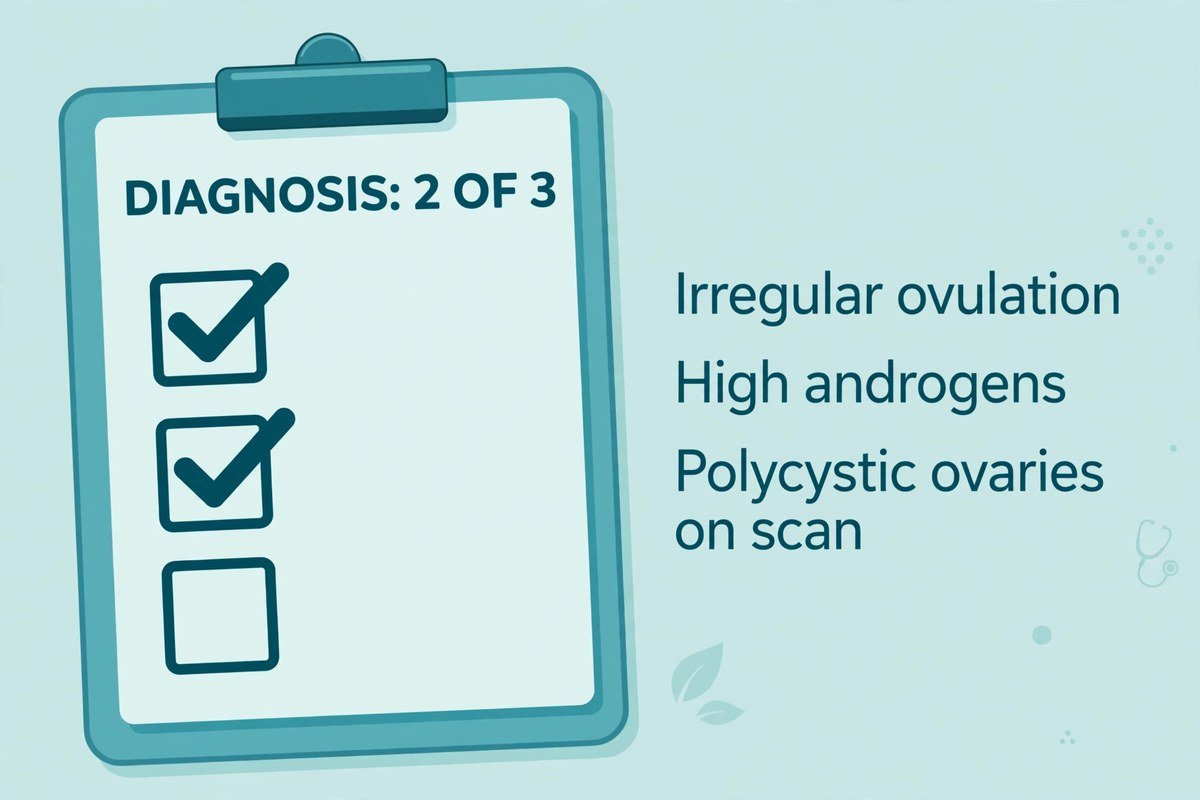
No single test confirms PCOS. Doctors instead use a well-known checklist called the Rotterdam criteria. Under it, a diagnosis usually needs two of the following three signs.
- Irregular or absent periods, showing that ovulation is irregular
- Signs of extra androgens, such as excess hair, acne, or a raised blood level
- Polycystic ovaries on an ultrasound scan, meaning many small follicles sit on the ovaries
Blood tests usually support the process. They measure hormone levels and rule out other conditions with similar signs. A scan, meanwhile, shows the ovaries directly. Doctors also ask about your cycle history and symptoms. In short, the diagnosis is a careful jigsaw, not a single snapshot.
One more point helps many readers. A scan alone can neither confirm nor clear the diagnosis. Some women with textbook symptoms show ordinary ovaries on screen. Some women with busy-looking ovaries, in contrast, feel perfectly well. Doctors therefore weigh blood results, cycle history, and visible signs together. That balanced method, in practice, protects you from both missed answers and wrong labels.
Why the PCOS Name Is Misleading
The name confuses almost everyone at first. The “cysts” in polycystic are not true cysts at all. They are small, fluid-filled follicles, each holding an immature egg. These follicles are harmless in themselves. They simply show that eggs begin growing but often stall before release.
Two surprises follow from that fact. First, a woman can have PCOS without polycystic ovaries on a scan. Second, a woman can show many follicles and still not have the syndrome. The name, therefore, describes one possible feature, not the whole condition. Hormones, in the end, matter more than the picture on the scan.
How PCOS Is Treated and Managed
There is no cure for PCOS yet. Treatment, instead, targets your main symptoms and your long-term health. Plans differ from person to person, because the pattern differs.
Lifestyle steps usually come first. A balanced diet, regular movement, and weight loss where relevant can ease several symptoms at once. Even a modest weight change can help cycles return and improve insulin levels. Doctors, in fact, often call these steps the foundation of care.
Medicines can then address specific problems. The combined contraceptive pill can regulate periods and calm acne or excess hair. Metformin may help where insulin resistance or blood sugar is a concern. Fertility medicines exist as well, and specialists prescribe them when pregnancy is the goal. Creams and hair-removal methods can manage unwanted hair in the meantime. Always discuss options with your own doctor, because the right mix depends on your tests and plans.
Living With PCOS Day to Day
Daily life with PCOS runs on small, steady habits. Food comes first for many women. Meals built on vegetables, protein, and whole grains keep energy steadier than sugary snacks do. Movement helps in a similar way. A daily walk, some strength work, and regular sleep all support insulin and mood at once.
Practical tracking also reduces stress. A simple cycle diary shows your pattern within a few months. Skin and hair routines, meanwhile, work best when they stay gentle and consistent. Most importantly, pace yourself. PCOS management is a marathon of ordinary choices, not a week of perfection. Small wins, repeated calmly, are exactly what move symptoms over time.
PCOS Meaning and Fertility: What to Know
Fertility worries many readers of this page, so it deserves clear words. PCOS is one of the most common reasons for irregular ovulation. When eggs release rarely, pregnancy simply takes longer to happen. Our ovulating meaning guide explains how egg release works month by month.
The hopeful part matters just as much. Many women with PCOS conceive naturally, especially once cycles settle or weight shifts. Others conceive with standard medical help, such as medicines that prompt ovulation. A fertility specialist can map the options in order. In short, PCOS can delay pregnancy, but it rarely ends the story.
PCOS and Long-Term Health
PCOS deserves follow-up care beyond fertility and periods. The same insulin resistance behind many symptoms also raises the chance of type 2 diabetes over time. Blood pressure and cholesterol can drift upward as well. Regular screening, therefore, is part of good PCOS care. Simple checks catch small changes before they grow into problems.
Sleep and mood belong in the same picture. Women with PCOS report poorer sleep more often, and snoring with pauses in breathing deserves a mention to your doctor. Very long gaps between periods also matter for the womb lining, which is why doctors ask about cycle length at reviews. None of this should frighten you. It simply means steady, ordinary monitoring works in your favour for decades.
When to See a Doctor
At the appointment, expect questions first. The doctor will ask about your cycles, your symptoms, and your family history. Then, they may check your weight, blood pressure, and skin. Blood tests usually follow, and a scan may come later. The whole process, in short, builds the pattern piece by piece. Nothing about it is rushed or painful.
Book a visit if your periods stay very irregular or stop for months. Do the same if excess hair, stubborn acne, or rapid weight change bothers you. Seek advice as well if you have tried to conceive for a year without success. Early answers, after all, make every later step easier. A doctor can test, explain, and build a plan around your results.
FAQ’s
Is PCOS the same as PCOD?
The two terms overlap heavily. PCOD, meaning polycystic ovarian disease, is an older label used widely in India. Most doctors today prefer PCOS, because the condition affects the whole body, not only the ovaries. In practice, articles using either term usually discuss the same pattern.
Can PCOS go away completely?
PCOS is a long-term condition, so it does not simply vanish. Symptoms, however, can ease a great deal with management and time. Cycles may settle, skin may calm, and weight may stabilise. The pattern can also change with age, which is why regular reviews help.
Can teenagers be diagnosed with PCOS?
Signs can appear in the teenage years, yes. Doctors move carefully with teens, though, because puberty itself causes irregular cycles and acne. They usually watch the pattern over time before confirming a diagnosis. Early guidance still helps, especially on healthy routines and cycle tracking.
Can PCOS affect your mood?
It can. Studies link PCOS with higher rates of anxiety and low mood. The visible symptoms, such as acne or excess hair, can also dent confidence. Support, honest information, and a good care plan all help. Tell your doctor if your mood dips, because that is part of care too.
Do all women with PCOS have fertility problems?
No. Many women with PCOS conceive without any treatment at all. Others need simple help to trigger regular ovulation. The condition raises the chance of delay, not the certainty of it. A specialist can check your own situation quickly and clearly.
Conclusion
The pcos meaning, in the end, describes a common hormone pattern, not a mystery illness. It links irregular ovulation, extra androgens, and often many small ovarian follicles. It also connects with insulin, weight, skin, hair, and mood. That wide reach explains why its signs vary so much between women. It also explains why no single test can settle the question alone.
Thankfully, understanding the pattern is the hardest first step. After that, lifestyle habits, the right medicines, and regular reviews can manage most symptoms well. Many women with PCOS live full, healthy lives and build families on their own timeline. If the signs in this guide sound familiar, book a doctor’s visit and ask your questions early. A diagnosis, in the end, is a starting point for care, not a verdict on your future.


Leave a Comment