

Some people leave a lively party feeling oddly drained, even after a fun night. The introvert meaning explains it simply: an introvert turns energy inward and recharges through quiet time alone. In fact, introverts enjoy people, laughter, and good conversation. However, long stretches of social activity slowly empty their inner battery. As a result, they need calm time alone to feel fully themselves again.
This guide explains the introvert meaning in plain words first. Next, it traces the word back to Carl Jung and its Latin roots. Then, it lists the core traits and clears up a common mix-up with shyness. After that, it covers quiet strengths, simple recharging habits, and texting life. By the end, you will describe introverts accurately and drop the usual stereotypes.
The label matters because it shapes how people judge quiet behaviour. A quiet colleague may look bored, distant, or even rude to an outsider. In reality, the same colleague is saving energy for work that counts. This guide separates the real pattern from the myth.
Introvert Meaning in Plain Words
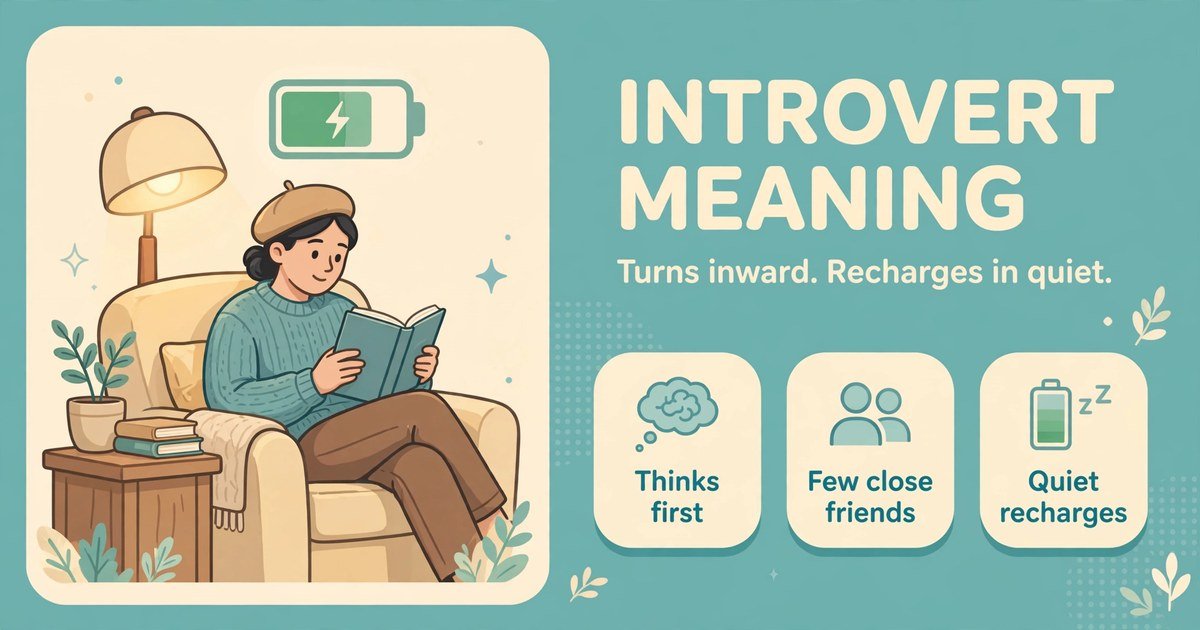
Merriam-Webster defines an introvert as a typically reserved or quiet person who tends to look inward. The dictionary also notes that introverts enjoy spending time alone. In plain words, then, the introvert meaning describes a personality style, not a mood or a flaw. First, an introvert focuses on the inner world of thoughts, feelings, and ideas. In addition, an introvert usually prefers a few close friendships over a wide social circle. Meanwhile, an extrovert gains energy from the outer world of people and action. Overall, neither style is better or worse. In short, they simply run on different fuel.
For example, an introvert may love a long dinner with two close friends. However, the same person may dread a huge networking event with a hundred strangers. Indeed, the setting matters more than the people themselves. Small groups feel comfortable and safe. In contrast, crowds feel loud, fast, and tiring. As a result, introverts often plan their social time with care.
In addition, the definition covers preference, not ability. An introvert can present to a boardroom, perform on stage, or lead a workshop. The skill is real, and the effort behind it is real too. Afterwards, though, the same person craves silence and space. In short, watch the recovery, not the performance.
Where the Word Introvert Comes From
The word introvert comes from Latin, and its parts tell the whole story. Intro means inward, and vertere means to turn. Together, they describe a person who turns inward. Swiss psychologist Carl Jung introduced the terms introvert and extrovert in the early 1900s. Later, he set out his full theory in his 1921 book Psychological Types. For Jung, the introvert meaning centred on energy: where a person directs it and where it renews.
Jung also warned readers against rigid labels. He argued that nobody is a pure introvert or a pure extrovert. Instead, most people sit somewhere along a scale between the two poles. Later, personality models such as the Myers-Briggs test and the Big Five kept his core idea alive. Today, psychologists still treat introversion as one end of a spectrum. In short, the word began as a technical term and then entered everyday speech.
Jung counted himself an introvert, and he viewed Freud as a classic extrovert. Their famous disagreements, in his eyes, reflected two different orientations to the world. Later readers recognised their own habits in his descriptions. As a result, the labels spread quickly through psychology and then into ordinary conversation.
Introvert Meaning and Core Traits
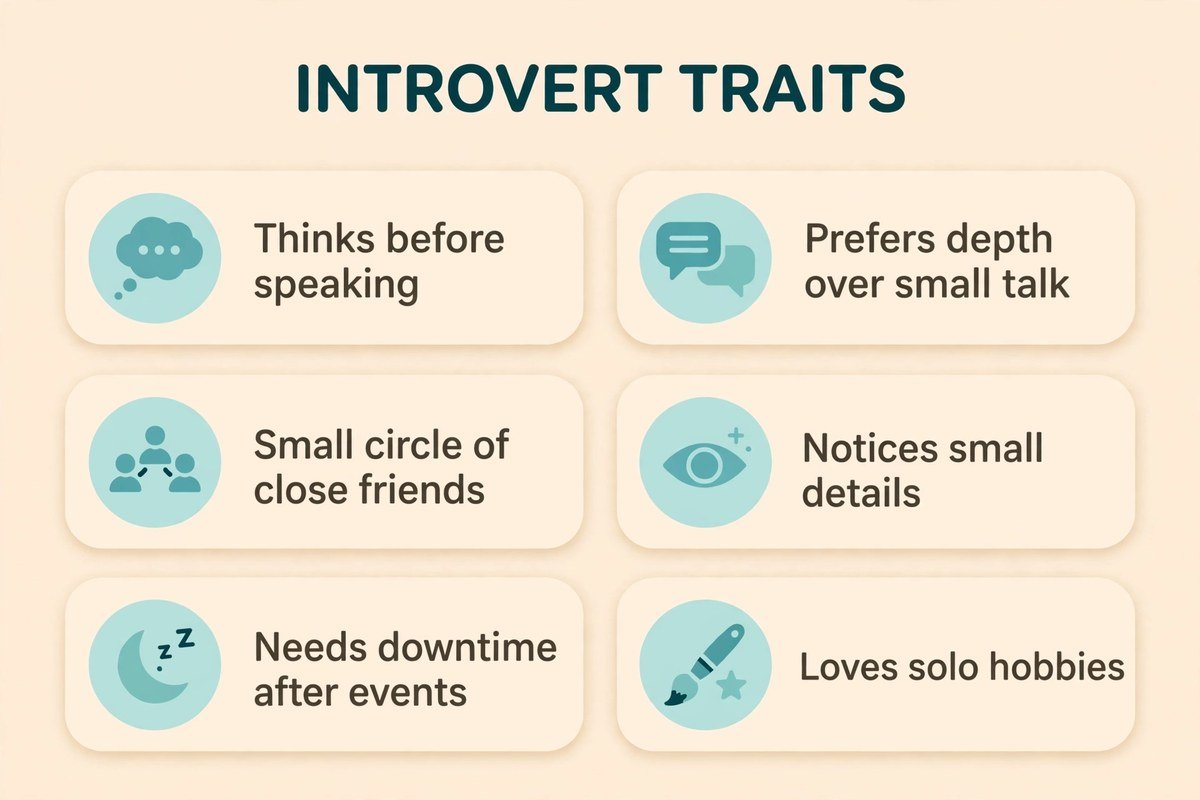
So, how does introversion actually show up in daily life? The introvert meaning becomes clearer when you look at everyday habits. First, introverts usually think before they speak. They process ideas quietly and then share a finished thought. In addition, they prefer depth over breadth in almost everything. For example, they choose one long conversation over twenty quick chats.
- They enjoy solo hobbies such as reading, walking, gaming, or making music.
- A small circle of close friends matters more to them than a crowd.
- They notice details that louder rooms often miss completely.
- Careful listening helps them remember what people tell them.
- Downtime after busy events is essential, even after enjoyable ones.
- Writing or texting often beats a spontaneous phone call for them.
Of course, no single trait defines every introvert. Some introverts teach classes, run busy shops, or perform on stage. However, they still recharge in the same quiet way afterwards. In fact, the recharge habit is the clearest sign of all. Overall, traits vary, but the energy pattern stays consistent. Above all, these traits describe tendencies, not rules carved in stone.
Introvert vs Shy vs Antisocial: The Key Difference
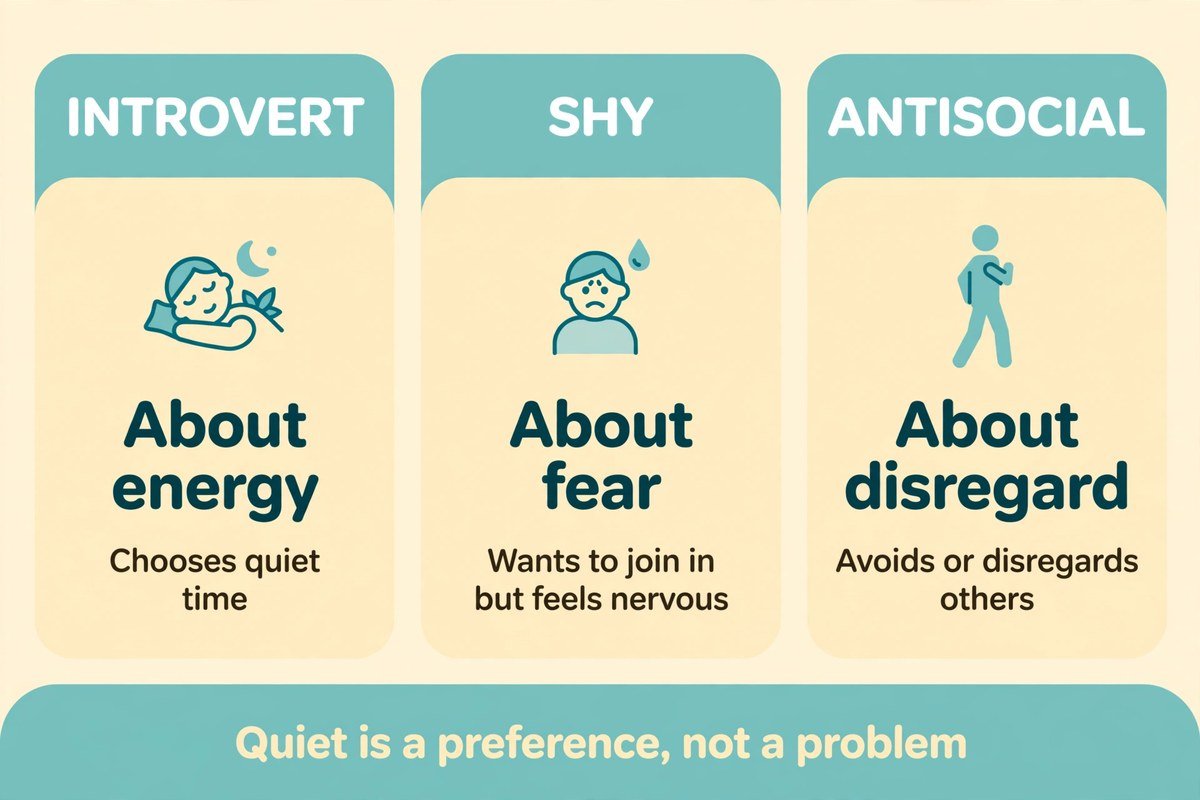
People often mix up three different ideas, and the mix-up causes real unfairness. Introversion, shyness, and antisocial behaviour describe three separate things. In fact, one short line separates them neatly: introversion is about energy, shyness is about fear, and antisocial behaviour is about disregard. The three short sections below explain each one.
Introversion Is About Energy
An introvert chooses quiet time because social activity costs energy. The choice is calm and deliberate, not anxious. For example, an introvert may happily attend a wedding and still leave early. The early exit protects tomorrow’s energy. Nothing about the choice involves fear of the guests.
Shyness Is About Fear
Shyness works differently, because fear of judgement drives it. A shy person often wants to join the conversation yet worries about saying the wrong thing. Importantly, shyness can strike extroverts too. A shy extrovert craves company and still feels nervous around strangers. As a result, shyness and introversion overlap only sometimes.
Antisocial Means Something Else
People also misuse the word antisocial in casual speech. Usually, they mean asocial: someone who avoids social contact. True antisocial behaviour involves disregard for other people’s rights and feelings. Introverts, by contrast, usually care deeply about their friends. They simply enjoy those friends in smaller doses. Overall, a quiet evening at home signals introversion, not hostility.
Finally, remember that one person can carry several of these labels at once. Someone can be an introvert and shy, or an extrovert and shy. The labels describe different layers, so they combine freely. Clear labels, as a result, lead to fairer judgements of quiet people.
Quiet Strengths Introverts Bring
Introverts rarely advertise their strengths, yet teams and families rely on them daily. First, introverts listen with unusual care. They hear the point behind the words and notice who has stayed silent. In addition, they focus deeply for long stretches without constant company. That focus suits careful, detailed work of many kinds.
Similarly, introverts often think before they act, and that habit prevents hasty mistakes. They also build loyal, lasting friendships because they invest in a few people fully. For example, the friend who remembers small details usually turns out to be the quiet one. Quiet confidence links closely with humility, since introverts seldom chase the spotlight. Finally, many introverts create their best ideas alone, in the quiet hours others skip.
Employers notice these strengths during crises, because introverts stay calm under pressure. They gather facts quietly, weigh the options, and then speak with care. Moreover, their written communication often shines, since writing gives them thinking time. A thoughtful email from an introvert can settle a problem that meetings only inflamed.
How Introverts Recharge Their Energy
Recharging looks different for every introvert, but the pattern stays simple: low input, low demand, full control. First, solo time forms the base of the routine. A walk alone, an hour of reading, or music through headphones can restore a surprising amount of energy. Next, introverts protect small gaps between plans. A free hour between meetings acts like a buffer.
In addition, many introverts recharge through absorbing hobbies, because hobbies demand nothing socially. Cooking, drawing, coding, gardening, and gaming all absorb attention pleasantly. Meanwhile, rest does not always mean sleep or silence. Sometimes, one relaxed conversation with a trusted friend recharges more than an empty evening. Overall, the rule is choice: introverts recover fastest when they choose the quiet themselves.
Introverts also manage their surroundings with care. A tidy desk, a familiar cafe corner, or a regular walking route lowers the input further. Headphones act as a polite door in open-plan offices and busy homes. Small rituals like these, in short, protect the battery throughout the day.
Introvert Meaning in Texting and Social Life
Texting suits introverts well, and the introvert meaning shows clearly in chat habits. First, a text lets an introvert think before replying, just like in conversation. As a result, replies may arrive slowly, yet they usually carry real thought. A delayed reply rarely signals anger or dislike. Instead, the person is probably busy, tired, or simply out of social fuel.
Group chats, however, can drain introverts quickly. Messages pile up, jokes fly past, and the pressure to respond never stops. In contrast, one-to-one chats feel calm and manageable. Similarly, introverts often prefer planned hangouts over surprise visits. A plan lets them save energy for the event itself. Finally, leaving a party early or skipping one busy weekend is about the battery, not the friendship.
Calls, by contrast, demand instant answers and offer no thinking space. As a result, many introverts let unknown numbers ring out and read the message later. Close friends learn the pattern quickly and text first. That small courtesy keeps communication easy on both sides.
FAQ’s
Can an introvert become an extrovert?
Not fully, because core personality stays fairly stable across adult life. However, introverts can build strong social skills with practice. Many speak confidently at work and still recharge alone at night. In short, behaviour can stretch, but the underlying preference usually stays.
What is an ambivert?
An ambivert sits near the middle of the introvert-extrovert scale. Ambiverts enjoy company in moderate amounts and also value quiet time. They adapt easily to both lively and calm settings. Indeed, many people who feel in between are probably ambiverts.
What jobs suit introverts well?
Introverts often thrive in roles with deep focus and limited small talk. Writing, design, programming, research, editing, and accounting suit many of them. However, people skills matter in almost every job today. The best fit depends on the person, not the label alone.
Do introverts get lonely?
Yes, introverts feel loneliness like everyone else. They need real connection, but in smaller, calmer doses. A long talk with one close friend often satisfies them fully. In fact, too much isolation drains introverts too, just more slowly.
How can you support an introvert friend?
Give them notice before plans, and accept a no without pressure. Choose quieter settings for hangouts when you can. Also, let silences sit comfortably instead of filling every gap. Overall, respect for their recharge time strengthens the friendship most.
Conclusion
In the end, the introvert meaning comes down to energy, not attitude or ability. Introverts turn inward for fuel, exactly as the word’s Latin roots suggest. They think carefully before they speak, and they recharge through quiet time that they choose themselves. Crucially, introversion is not shyness, rudeness, or dislike of people. Shyness is fear, introversion is preference, and that one distinction clears up years of confusion.
Once you see that pattern, introverts become much easier to understand and respect. Their careful listening, deep focus, and steady loyalty are genuine strengths in families, friendships, and teams. Treat quiet people by that pattern, and most misunderstandings fade quickly. So give an introvert room to recharge, enjoy the depth they bring, and never mistake a quiet evening for an empty one.


Leave a Comment