

Some phrases survive for a century because they do one job perfectly. The get a load of this guy meaning is exactly that: it is a sarcastic way of saying “look at this person — can you believe them?” People use it when someone has said or done something foolish, arrogant, or absurd, and they want everyone nearby to notice. The get a load of this guy meaning carries a smirk, not a shout. It mocks by pointing rather than arguing. This guide explains the tone, traces the phrase from 1920s slang through a famous film scene to its meme afterlife, and shows you how to use and answer it today.
What Is the Get a Load of This Guy Meaning, Exactly?
At its core, the phrase means: direct your attention to this person, because what they are doing is unbelievable. The “load” is an old slang word for a good look or a full view, so “get a load of” simply means “take a look at”. Add “this guy” plus the right tone, and the look becomes a judgement. The speaker is not really asking you to look. They are asking you to agree that the person is ridiculous.
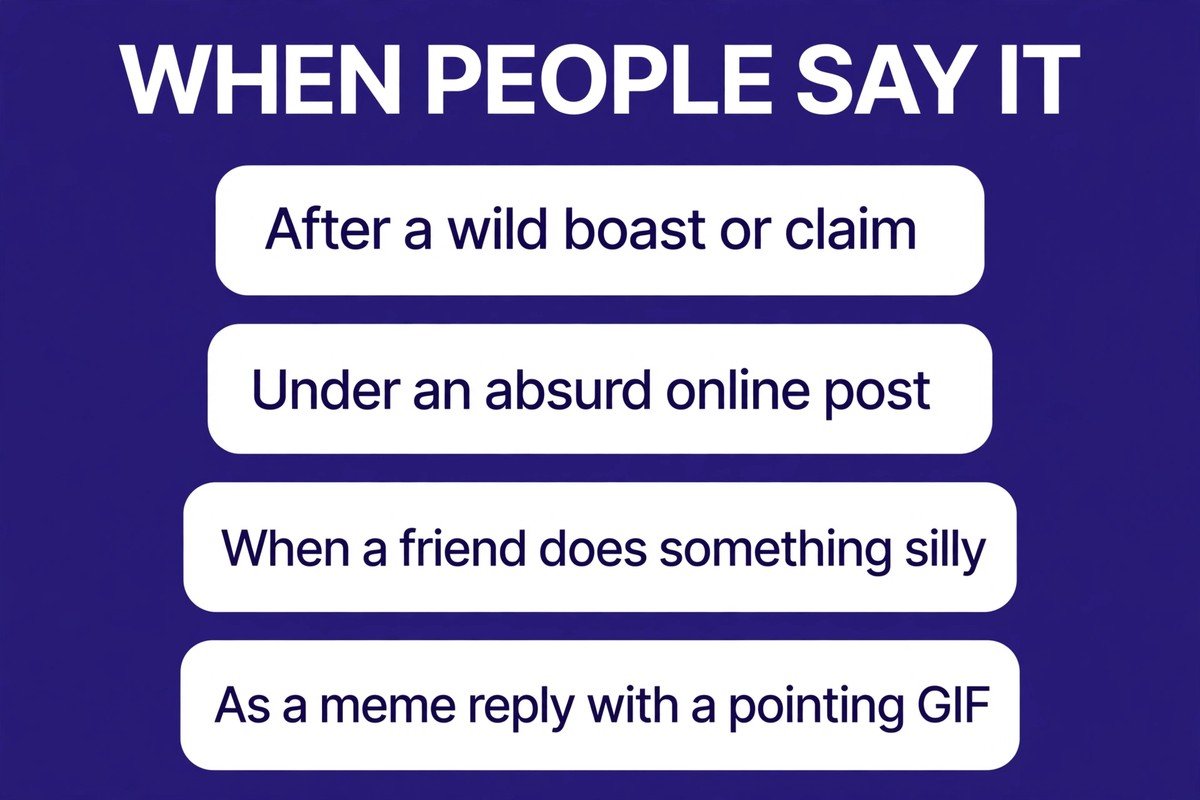
The target is usually someone showing off, talking nonsense, or acting with misplaced confidence. A man explaining a sport he clearly never played. A commenter posting a wildly wrong fact with total certainty. A friend arriving at a casual dinner dressed like a film premiere. In each case the phrase performs the same move: it turns one person’s behaviour into a shared joke for everyone else.
Tone decides whether it lands as friendly or cutting. Between friends it is gentle ribbing, and the target often laughs along. Aimed at a stranger’s bad opinion online, it is pure dismissal. The words never change, but the relationship around them does all the emotional work.
How the Phrase Is Used in Text, Memes, and Chat
Online, the phrase usually appears as a reply. Someone posts something absurd, and the next comment is simply “get a load of this guy”, often with a pointing reaction image or GIF. No argument follows, because the phrase is the whole argument: this does not deserve a serious answer. In group chats it works the same way when a friend shares a screenshot of an outrageous message. The phrase rallies the group into amused disbelief.
In spoken conversation it sounds like this:
- Friend, after a boast: He says he could beat the coach one-on-one.
- You, to the group: Get a load of this guy.
- Colleague, quietly: The new manager just took credit for your idea in the meeting.
- You: Yeah. Get a load of this guy.
- Commenter, under a wild post: Get a load of this guy. He really typed that and hit send.
Notice how the phrase is always aimed sideways, at an audience, rather than at the person themselves. That is its signature geometry. The speaker turns away from the target and recruits witnesses. If you want a similarly sideways piece of modern slang, our what does gng mean guide shows how friend groups build their own in-jokes in text form.
Where the Phrase Comes From: 1920s Slang to Wayne’s World
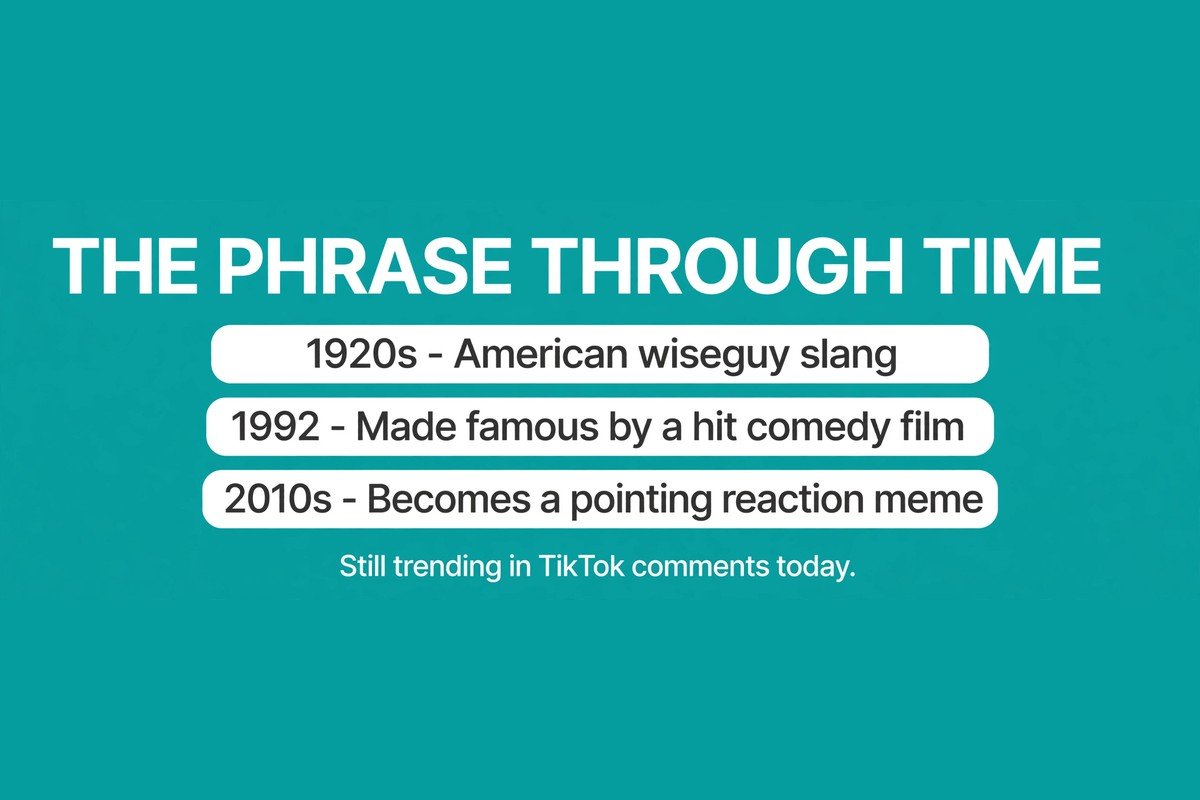
The phrase is far older than the internet. It circulated in American slang by the 1920s, in the era of wiseguys, speakeasies, and fast-talking film characters. “Get a load of” was a standard way to say “look at”, and pointing it at a person with a raised eyebrow gave it the mocking edge it still carries. It survived through decades of comedy, cartoons, and everyday speech, always meaning roughly the same thing.
In the film, the running gag even had a name: a pretend camera segment devoted to the line. The character would turn to the audience, shield the remark from his friend beside him, and deliver it straight to the viewers. That fourth-wall break is the whole trick of the phrase performed on screen. The audience becomes the friend group, the friend becomes the exhibit, and everyone at home learns exactly how the move is done. When the internet later needed a picture for the feeling, that frame was already waiting.
Its modern fame, though, comes from one film. In the 1992 comedy Wayne’s World, the hosts ran a joking segment built around the line, and the hero’s smirking point at his friend burned the phrase into pop culture. The delivery mattered as much as the words: a grin, a thumb pointed sideways, and an aside to the camera. That combination (confidence, pointing, audience) became the phrase’s permanent visual signature.
Why Indirect Mockery Hits Harder Than an Argument
There is a reason this phrase outlived a century of other slang: it corrects behaviour socially instead of logically. A direct argument gives the other person something to fight. A sideways point gives them nothing to fight, only an audience to notice. Being argued with can feel like respect; being pointed at feels like a verdict. That is why the phrase ends debates so efficiently, and why it can sting far beyond its five innocent-looking words.
It also offers the speaker perfect safety. Technically, they only asked you to look. The mockery lives in the tone, so it can always be denied: “I just said get a load of him, relax”. This deniability is part of the design. The phrase lets a group police arrogance and nonsense while keeping everything technically a joke, which is exactly how friend groups have always enforced their rules.
Used kindly, that social pressure is useful. It punctures pomposity before pomposity ruins the evening, and it does so with laughter instead of a lecture. Used cruelly, the same tool becomes public shaming. The words are a lever; the hands and the moment decide what it lifts.
The Meme: A Point, a Smirk, and a Thousand Faces
Around 2010, screenshots of that pointing moment began circulating on forums as reaction images, and the caption came with them. The format spread because it fits almost any situation. Other famous faces joined in over the years, including Ross Geller from Friends and Patrick Bateman from American Psycho, each shown pointing with a smug expression. The joke never changes, only the face delivering it.
The meme still refuses to die. It resurfaces in waves, most recently across TikTok comment sections, whenever a fresh supply of ridiculous posts appears. Meme historians at Know Your Meme have tracked its revivals in detail. Its staying power makes sense: every generation produces people who need pointing at, and the phrase does it in five words and one gesture.
Get a Load of This Guy Meaning in Different Tones
Because the get a load of this guy meaning depends so heavily on tone, it helps to separate its main registers. The friendly register appears between people who like each other. A friend does something gloriously silly, and the phrase celebrates it as much as it mocks it. The target is in on the joke, and being pointed at is almost an honour.
The dismissive register is the internet’s favourite. Here the phrase replaces debate entirely. It says the opinion is beneath answering, so ridicule will do instead. This version can feel harsh, and it sometimes ends conversations rather than winning them. Used at work or at a stranger, it can read as genuine contempt, so it deserves care in real life even if it flies freely in comment sections.
Finally, note the neutral cousin: “get a load of that”, aimed at things. “Get a load of that car” or “get a load of this view” carries no mockery at all, just admiration or surprise. The mocking flavour arrives with “this guy” and with context. Keeping the two apart will save you from hearing an insult in a compliment about a sunset.
Similar Phrases and How to Reply
English owns a whole drawer of these pointing phrases. “Can you believe this guy?” is the closest relative and means nearly the same. “Check out this guy” and “look at this guy” are milder cousins. “Who does he think he is?” attacks the arrogance more directly, while “the nerve of this guy” adds real outrage. In meme language, “bro really said that” performs a similar job for a younger crowd.
There is also a self-pointing version: “Get a load of me”. People say it when they catch their own ridiculousness first, perhaps after spilling coffee down a clean shirt or locking their keys in the car. Saying it yourself disarms everyone else, because the joke is already told and the laugh is already shared. It is the phrase’s friendliest form, and often the funniest.
If the phrase is aimed at you, the best reply is usually to own the moment. Laugh, take a bow, or answer with cheerful confidence: “You are welcome, folks”. Getting defensive confirms the joke; enjoying it cancels the joke. Between friends, the traditional comeback is to point right back: “Get a load of YOU”, delivered with the same smirk. Escalating the mockery war is rarely wise, but returning the serve with a grin is exactly in the spirit of the game.
FAQ’s
Is “get a load of this guy” rude?
It is mocking, but the rudeness depends on the relationship. Between friends it is normal, affectionate teasing. Aimed at a stranger or a colleague, it can sound dismissive and contemptuous. The same words do both jobs, so the setting decides.
Where did the phrase come from originally?
It comes from American slang of the 1920s, where “get a load of” meant take a look at. The 1992 film Wayne’s World made it famous for modern audiences, and forum users turned that film moment into a reaction meme around 2010.
What does “get a load of that” mean?
Aimed at a thing rather than a person, it simply means look at that, usually with admiration or surprise: “Get a load of that sunset.” The mocking meaning belongs to the “this guy” version.
Can you say it about a woman?
Yes. People adapt it naturally as “get a load of her” or keep the original phrase, since “guy” is often used loosely for anyone. The pointing gesture and the tone stay exactly the same either way.
Why do people point when they say it?
The point is part of the phrase’s grammar. It copies the famous film delivery: turn to the audience, point sideways at the person, and let the gesture say “can you believe him?” before the words arrive. Online, pointing reaction images do the same job in picture form.
How should you respond if someone says it about you?
Laugh and own it. A bow, a grin, or a cheerful “thank you, thank you” turns the joke in your favour. Arguing or sulking tends to prove the pointer’s point, so confidence is the best comeback.
Conclusion
The get a load of this guy meaning has barely changed in a hundred years: take a look at this person, because they are being unbelievable. Born in 1920s slang, crowned by a 1992 film scene, and kept alive by memes, it remains the quickest way to turn one person’s foolish moment into everyone’s shared joke. Its power lies in the sideways point: it recruits the audience instead of fighting the target.
Use it where the laughter is shared and it will serve you well for years, just as it has served wiseguys, film characters, and comment sections before you. And if it ever gets pointed at you, smile and take the bow. That response has been the winning move since the phrase was young. Get a load of this guy meaning what it does, the game belongs to whoever enjoys it most.


Leave a Comment