

The durian meaning points to one unforgettable fruit: the durian, the spiky king of fruits from Southeast Asia. People praise its rich, creamy flesh, yet they also joke about its powerful smell. This guide explains the durian meaning in plain words first. Then, it explores the fruit itself, its taste, its home region, and its place in daily culture.
You will also learn why hotels ban this fruit and why fans defend it so fiercely. In addition, you will find simple tips for choosing and eating a ripe durian. By the end, the durian meaning will cover far more than a dictionary line. It will include a smell, a season, and a whole regional celebration.
Durian Meaning in Simple Words
In simple words, durian names a large tropical fruit with a hard, thorny shell. Inside that shell sit soft pods of golden, custard-like flesh. The word durian comes from the Malay word duri, which means thorn. A suffix joins duri, so the name itself means something like the thorny one. Few fruit names describe their fruit so honestly.
The fruit grows on tall evergreen trees in hot, rainy lowlands. A single durian often weighs one to three kilograms. Its spikes cover the whole husk, so handlers use gloves and care. When you cut the husk open along its seams, the flesh rests in neat sections. Each section holds one large, smooth seed.
Where Durian Grows and Who Grows It
Durian trees grow best near the equator, where heat and rain stay steady. Malaysia and Indonesia form the fruit’s old homeland. Thailand now leads the world in durian exports, and Vietnam and the Philippines also grow large crops. Farmers there tend orchards for decades, because a tree needs years before its first good harvest.
Seasons shape the durian calendar in each country. In Malaysia, the main season runs through the warm middle months of the year. Thailand harvests earlier in its own hot season. During peak weeks, markets stack durians in huge green piles. Trucks then carry the fruit to cities across Asia, and planes fly premium fruit even farther.
The trees themselves look impressive in the orchard. A mature durian tree can rise forty metres or more above the ground. Its flowers open at night, and fruit bats pollinate many of them. Farmers hang nets or tie ropes beneath prized trees during harvest. A falling durian can injure a passer-by, so orchards take real care in season.
Why Durian Smells So Strong
The famous smell comes from sulfur-rich compounds inside the ripe flesh. Scientists have found dozens of aroma chemicals working together in one fruit. Some notes smell like roasted onion, while others suggest almonds, caramel, or cheese. Together, they build a scent that fills a room within minutes. That scent also lingers on clothes, in cars, and along hallways.
Your genes partly decide how the smell strikes you. Some people sense mostly sweet custard notes. Others catch the onion and sulfur side first, and they step back fast. Ripeness changes the balance too. An overripe durian smells far stronger than a firm, just-ripe one. In short, chemistry and personal taste share the blame.
What Durian Tastes Like
Most fans describe the taste as sweet, rich, and creamy. The texture feels like custard, avocado, and soft cheese at once. First bites often bring vanilla and almond notes. Later bites can add a gentle onion or garlic edge. That mix shocks many first-time eaters, yet it hooks loyal fans for life.
Texture matters as much as flavor here. Good flesh feels smooth, dense, and almost buttery on the tongue. Watery or stringy flesh signals a poor fruit. Color also hints at taste, from pale cream to deep golden yellow. Each variety paints its own shade, and each shade carries its own flavor strength.
First-time eaters often need two or three tries. The first bite mixes shock with curiosity, because smell and taste seem to argue. By the third bite, the creamy sweetness usually wins people over. Fans call durian an acquired taste with pride. They also warn newcomers to clear their schedule afterward, since the scent follows you home.
Famous Durian Varieties to Know
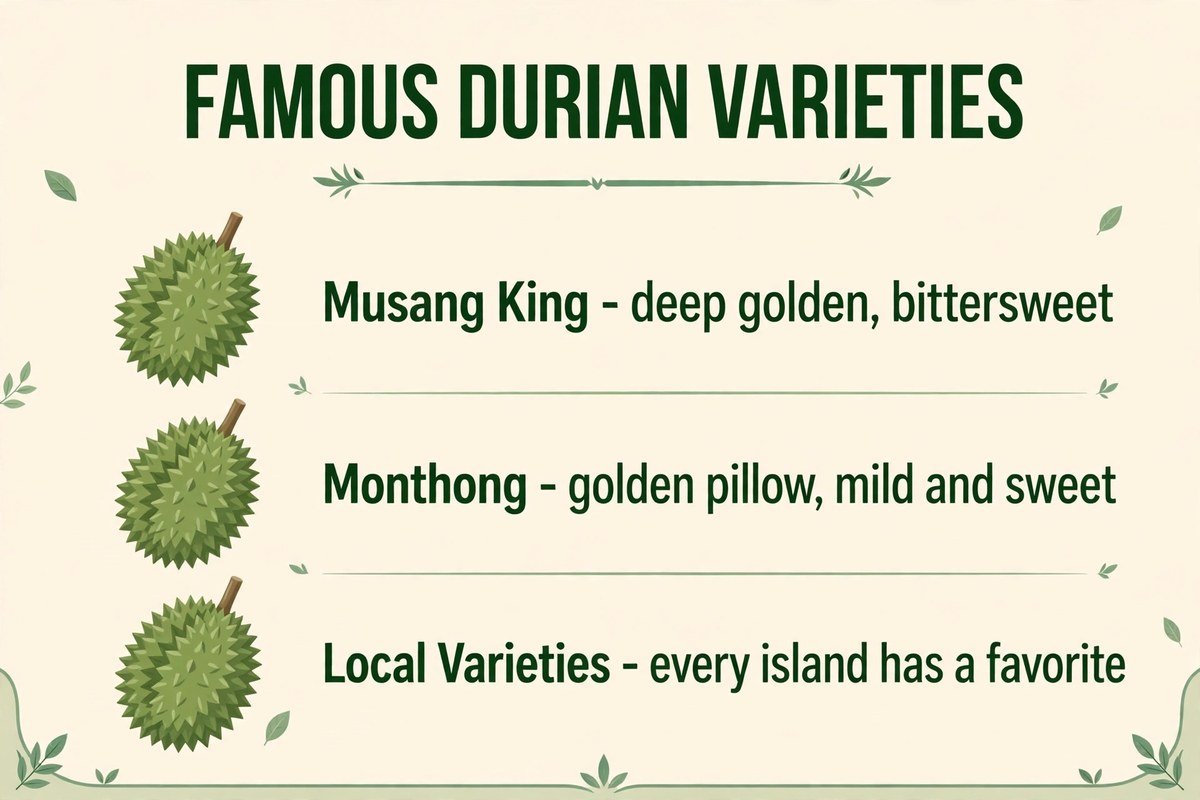
Malaysia’s Musang King stands as the most famous variety of all. Fans prize its deep golden flesh and its bittersweet punch. Thailand’s Monthong, often called the golden pillow, offers milder, sweeter flesh. Its large pods suit new eaters especially well. Indonesia grows many local varieties, and each island defends its own favorite.
Prices reveal the pecking order quickly. Musang King often sells for several times the price of common fruit. Sellers grade fruit by orchard, tree age, and harvest day. Some premium durians even carry traceable tags for proud buyers. In this market, the durian meaning includes status as well as taste.
How People Eat Durian
Most people eat durian fresh, straight from the husk. First, they choose a fruit with a strong scent and a slight give at the seams. Next, they cut or pry the husk open along its natural lines. Then, they lift out each pod and eat the flesh around the seed. Gloves help, because the smell clings to bare hands.
Cooks also fold durian into many dishes. Ice cream, cakes, pancakes, and sticky rice all welcome its flavor. Malaysian cooks stir it into tempoyak, a fermented durian paste for curries. Modern cafes blend it into milkshakes and puddings. Still, purists insist that fresh pods beat every recipe.
Durian buffets draw crowds during the season. At these open-air feasts, sellers crack fruit after fruit for a flat fee. Groups sit at long tables with gloves, water, and sometimes salt on the side. Vendors open common fruit first and save premium varieties for last. Laughter, debate, and strong opinions fill the evening air.
Durian, Jackfruit, and Mangosteen: Easy Differences
New shoppers often confuse durian with jackfruit. Both fruits grow large, and both look rough from the outside. Jackfruit skin carries bumps rather than sharp spikes, though. Its flesh forms firm, chewy bulbs with a sweet, fruity taste. Durian flesh, in contrast, feels soft and custard-like, and its smell travels much farther.
Mangosteen plays a different role in the same markets. Its dark purple shell opens to reveal white, juicy segments. The taste feels sweet, tangy, and refreshing after rich durian. Sellers often place mangosteen beside durian for exactly that reason. Together, the king and queen of fruits anchor the tropical fruit stall.
Durian Meaning Around the World
Outside its homeland, the durian meaning keeps growing. Chinese demand has turned durian into a major export earner for Thailand and Vietnam. Gift boxes of premium durian now mark weddings and business deals in some cities. Specialty shops in London, Sydney, and Toronto stock frozen pods for homesick fans. Each new market adds fresh stories to the fruit’s legend.
Food shows love durian as a challenge fruit. Hosts dare guests to taste it on camera, and reactions rarely disappoint. Behind the jokes, though, sits real respect for growers and sellers. A fruit that farmers tend for a decade deserves more than a punchline. Its fame now rests on flavor as much as on smell.
Durian Nutrition in General Terms
Durian gives plenty of energy for its size. Its flesh provides fiber, potassium, and vitamin C. It also offers several B vitamins and small amounts of minerals. Natural sugars and healthy fats explain its rich, filling feel. As with any energy-dense food, modest portions suit most people best.
Local tradition adds its own food lore. Many elders call durian a heating food in the old hot-and-cold system. They often pair it with mangosteen, the queen of fruits, for balance. Science treats such pairings as culture rather than rules. Still, the pairing shows how deeply the fruit sits in regional life.
Why Some Places Ban Durian
Many hotels, trains, and airports across Southeast Asia ban durian. Signs at doors show a durian with a red line through it. The ban targets the smell, not the fruit itself. In closed, cooled spaces, the scent spreads fast and fades slowly. Cleaning crews struggle to clear it from curtains and seats.
Airlines apply similar rules to fresh durian in cabins. Some cargo rules also limit the fruit on certain routes. Travelers instead carry durian as sealed paste, candy, or chips. Those forms keep the flavor while they spare fellow passengers. So, the bans reflect shared-space manners more than any danger.
Durian Meaning in Slang and Culture
Beyond the dictionary, the durian meaning carries pride and humor. Malaysians and Singaporeans call durian the king of fruits with real affection. The Malay idiom durian runtuh, a fallen durian, means a sudden windfall or lucky break. People use it for bonuses, jackpots, and surprise good fortune. A fruit that drops riches from a tree makes a perfect symbol.
Durian also tests friendships at shared tables. One friend smells dessert, while another smells disaster. Hosts in the region often joke about this split before serving. Durian parties turn the test into a festival during the season. If you enjoy word stories like this one, our serendipity meaning guide offers another happy accident of language. The detailed durian reference page gives a solid botanical overview as well.
How to Choose a Good Durian
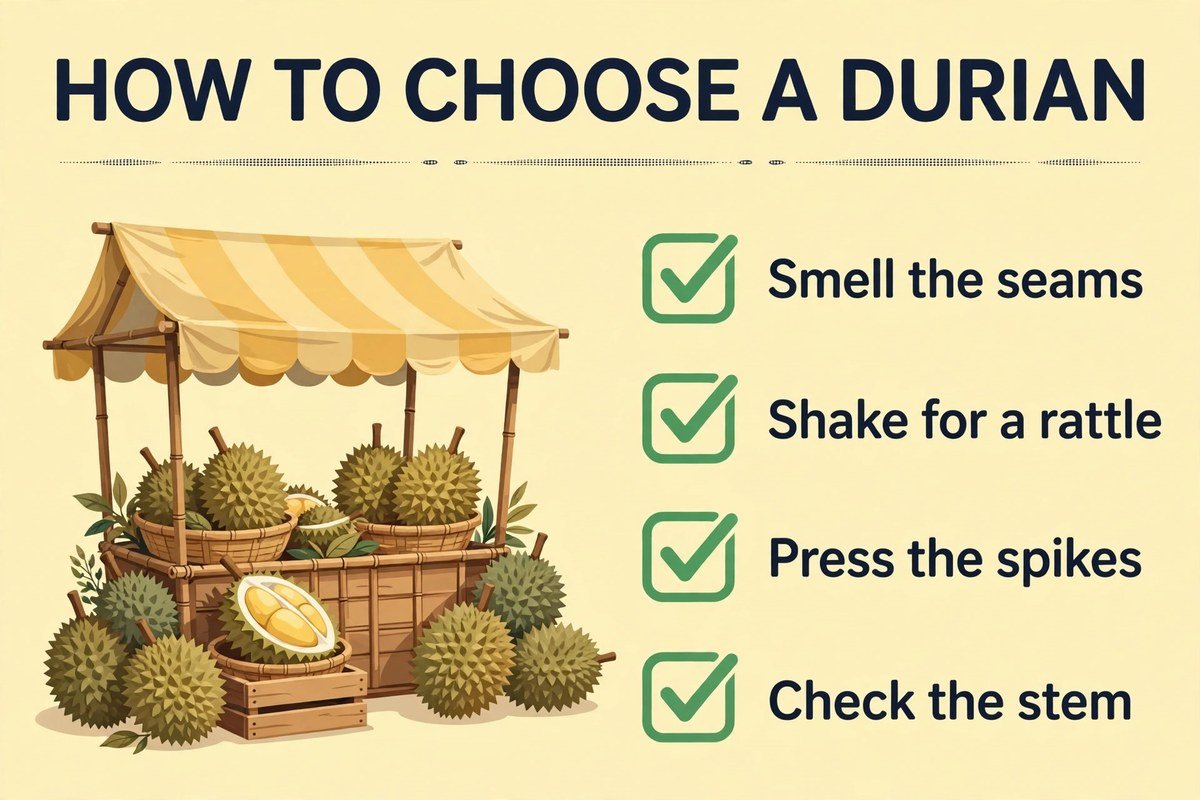
Shoppers follow a few trusted checks at the stall. First, they smell the seam area for a rich, sweet aroma. Next, they shake the fruit gently and listen for a slight seed rattle. Then, they press the spikes and look for a tiny give. Experienced sellers also tap the husk and judge the hollow sound.
Stems tell a freshness story too. A fresh, greenish stem suggests a recent harvest. A dry, dark stem hints at older stock. Weight matters as well, since a good durian feels heavy for its size. Finally, honest sellers open the fruit on the spot. That first look settles every argument about quality.
Price talks should stay friendly and clear. Ask the seller to weigh the fruit whole, then agree on the grade before opening. Good stalls replace a bad pod without argument. That trust keeps regulars returning week after week. A fair first purchase often starts a long durian friendship.
FAQ’s
Why do people call durian the king of fruits?
Fans use the title for its size, its thorn crown, and its rich flavor. In Southeast Asia, no other fruit inspires the same loyalty, debate, and seasonal excitement.
Can you take durian on a plane or train?
Usually, no. Most airlines and many train services ban fresh durian in cabins because its smell spreads and lingers. Sealed durian snacks, chips, and candies travel far more easily.
How do you know when a durian is ripe?
A ripe durian smells strong at the seams and gives slightly under pressure. Its stem looks fresh, and a gentle shake gives a soft rattle. Sellers also tap the husk for a hollow sound.
Does durian taste sweet or savory?
It tastes both at once. Most varieties start sweet and creamy, like custard with almond notes. Many then add a mild onion or garlic edge that fans enjoy and critics dislike.
Why does the durian smell last so long?
Its aroma compounds are strong, oily, and persistent. They cling to fabrics, car seats, and air-conditioning systems. Fresh air, time, and deep cleaning clear them only slowly.
What part of the durian do people eat?
People eat the soft flesh around each large seed. They discard the thorny husk and the seeds, although some cooks boil or roast seeds in a few local dishes.
Conclusion
The durian meaning starts with a thorny Malay word and grows into a regional legend. This large fruit offers custard-rich flesh, a sulfur-powered smell, and a season that fans await all year. Hotels ban it, markets celebrate it, and idioms turn it into a symbol of sudden luck. Few foods carry so much flavor, argument, and pride in one spiky shell.
Your first durian deserves a fair chance. Choose a ripe fruit, eat it outdoors with patient friends, and take small first bites. The smell may challenge you, yet the creamy taste explains the crown. King of fruits is a bold title, and this fruit defends it bravely.


Leave a Comment