

If you have seen the letters TW at the top of a post and wondered about the tw meaning, the short answer is simple. In texting and on social media, the tw meaning is trigger warning. People type it before content that could upset or distress some readers. In other words, it works like a small sign that says, “Sensitive material is coming up, so read on only if you feel ready.” This guide explains where the term comes from, how it is used in real chats, and how it differs from similar labels like CW.
What Is the TW Meaning in Texting and Social Media?
First of all, TW is an initialism, which means it takes the first letters of two words: Trigger Warning. A trigger warning is a short note placed before a post, video, article, or message. Its job is to flag a topic that might be painful for people who have lived through something similar. Common flagged topics include violence, grief, illness, abuse, and graphic images. As a result, readers can choose to keep scrolling, prepare themselves, or skip the content entirely.
The word “trigger” itself comes from psychology. In that field, a trigger is anything, a sound, image, smell, or topic, that brings back memories of a traumatic event. For someone with that history, an unexpected reminder can cause real anxiety or distress. A warning, therefore, is not about censorship. It is about choice. When readers know what is coming, they can brace themselves, read later, or walk away. That small moment of control makes a genuine difference for many people.
The idea first spread through online support communities and forums in the early 2000s. Later, platforms like Tumblr, Twitter, and Reddit carried it into the mainstream. Today, the tw meaning is recognised far beyond those spaces. Teachers, streamers, podcasters, and news sites all use the same two letters. In short, TW has become a standard piece of internet etiquette, a bit like the summary label in our tldr meaning guide, which also helps readers decide how to approach a post.
How TW Is Used in Text and Chat
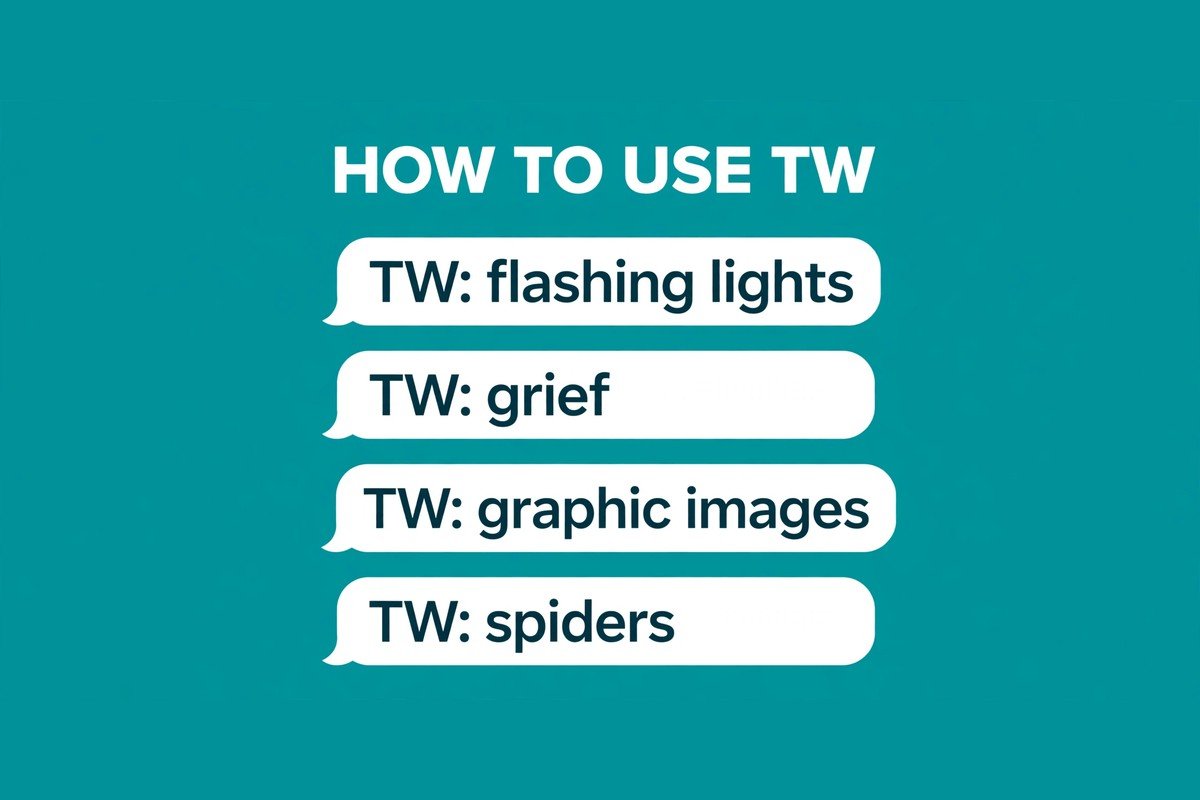
In practice, TW almost always appears at the very start of a message, followed by a colon and the topic. That format matters, because readers need to see the warning before they see the content itself. For example, a typical post might open with “TW: flashing lights” before a video, or “TW: grief” before a personal story. Meanwhile, the warning never replaces the content. It simply gives people a fair chance to opt out.
Here are some short example exchanges that show the pattern clearly:
- Poster: TW: car accident. Sharing photos from the crash site below.
- Friend: Thanks for the warning. I will skip this one today.
- Poster: TW: spiders. This thread has close-up pictures.
- Reader: Appreciated. I have a real phobia, so I am glad I knew first.
Different platforms handle the habit in slightly different ways. On TikTok, creators put the warning in the caption or as text on the first frame of the video. On Discord, members pair the label with spoiler tags that blur the message until clicked. Fan fiction archives, meanwhile, rely on detailed tag lists that serve the same purpose. The format changes, yet the principle stays identical everywhere: warn first, then share.
As you can see, the exchange stays polite and low-key. Nobody has to explain the warning, and nobody is forced to view something upsetting. Additionally, group chats often adopt the same habit for heavy news links. One member posts the warning, and everyone else decides for themselves. That simple courtesy is exactly why the label has lasted so long online.
TW Meaning vs CW Meaning: What Is the Difference?
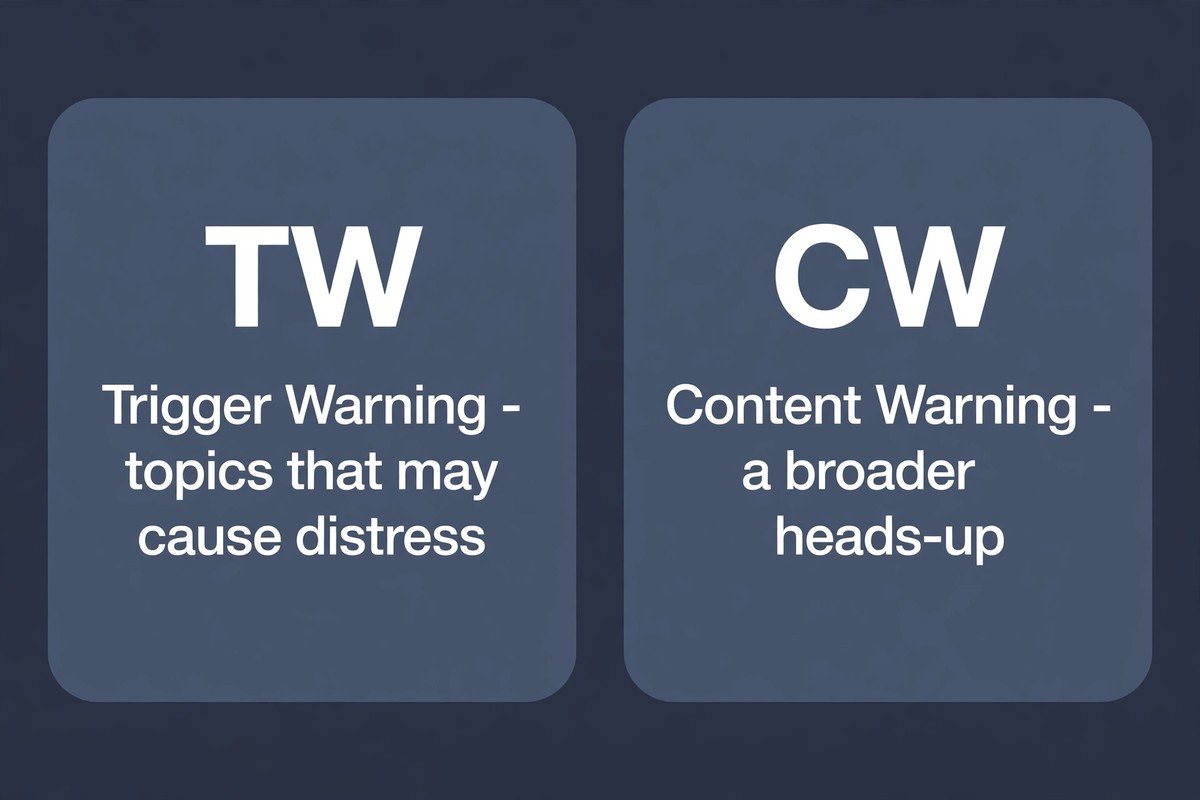
People often mix up TW with CW, and the confusion is understandable. CW stands for content warning, and it covers a broader range of material. For instance, a CW might flag spoilers, strong language, or a mildly graphic photo. A TW, by contrast, points to topics that could cause genuine distress or bring back traumatic memories. So, in simple terms, every TW is a kind of content warning, but not every CW is a trigger warning.
Some communities prefer CW because it feels more neutral. Others keep TW for the heaviest topics and CW for lighter ones. Either way, both labels share the same goal. They respect the reader’s choice. According to the Dictionary.com entry for trigger warning, the term is even listed with TW as its standard abbreviation, which shows how settled this usage has become.
Other TW Meaning Examples Outside Social Media
Of course, context can change everything, and TW has a few other established meanings. Outside chat and social media, the same two letters can stand for something completely different. Here are the most common alternatives:
- Taiwan: TW is the country code for Taiwan, which is why Taiwanese websites end in .tw.
- Taxiway: In aviation documents, TW is an official abbreviation for a taxiway, the path planes use on the ground.
- Total Weight: In shipping and logistics paperwork, TW can mean total weight.
- Tornado Warning: In weather alerts in the United States, TW may appear as shorthand for a tornado warning.
- This Week: In quick work messages, people occasionally use TW to mean “this week,” as in “Let us ship it TW.”
However, these senses appear in technical or professional settings. In an everyday text or post, trigger warning is the meaning to assume first. If the letters sit before a colon and a sensitive topic, the social media sense is almost certainly correct.
How to Use the TW Meaning Correctly
Using TW well takes only a few seconds. First, place it at the very top of your post, before any detail. Next, name the specific topic, because a bare “TW” alone does not tell readers what to expect. Then, avoid describing the upsetting part inside the warning itself. Finally, do not use the label as a joke or as clickbait, since that habit quickly erodes trust.
On the reading side, treat a TW as useful information rather than an insult. Someone added it to protect readers, possibly including you. If the topic is a hard one for you, skipping is always acceptable. And if you feel fine, you can simply read on. Either choice is exactly what the warning was designed to allow.
Where You Will See the TW Meaning Used Online
The tw meaning shows up almost everywhere people post personal or intense content. On TikTok, creators place TW in the caption or on the video itself before showing anything upsetting. On X, writers add it at the start of a thread, so readers can mute or scroll past in time. Instagram users often put the warning on the first slide of a carousel. As a result, the real image stays hidden until a person swipes.
Meanwhile, fan fiction sites have used warnings for decades. On Archive of Our Own, authors tag stories with archive warnings before the first chapter. Discord servers follow the same habit. Members hide sensitive text behind spoiler bars and label it first. Reddit communities do this too, since many subreddits require a warning in the post title. In short, each platform has its own style. However, the purpose never changes. The label gives readers a fair choice before they engage.
Common Topics That Get a TW Label
Some topics appear again and again under the tw meaning. Posters add the label when a post discusses distressing subjects in detail, especially with images or personal stories. The most common examples include:
- Violence, abuse, or graphic injury
- Death, grief, and serious illness
- Eating disorders and self-harm
- Mental health struggles, panic, and trauma
- Flashing lights, loud sounds, and jump scares
- Strong language, slurs, or hate content
Of course, this list is not complete. Communities keep adding new labels as new sensitivities appear. For example, some fandoms now warn for eye strain or bright colours. Others warn for pregnancy loss or medical photos. The safest approach is simple. If a post could ruin someone’s day without warning, label it. A two-second warning costs the poster nothing. Yet it can mean a great deal to the reader.
How to Add a TW to Your Own Posts
Adding a warning takes only a few seconds. First, write TW in capital letters at the very start of your caption or post. Next, name the topic in plain words, such as TW: blood or TW: car accident. Then add a line break or a row of dots. This pushes the sensitive content below the fold. Finally, check the whole post once more before you publish it.
A Simple Format That Always Works
A clear format keeps things easy for everyone. You can copy this pattern: TW: [topic], then a short pause, then your content. For videos, place the same text on screen for the first two seconds. For images, put the warning on a plain first slide. Additionally, avoid hiding the warning inside hashtags only. Many readers never read hashtag blocks, so they may miss it. When the warning sits at the top in plain sight, the tw meaning does its job properly. Readers who need it can step away. Everyone else can simply keep reading.
How the TW Meaning Spread Beyond Social Media
The habit did not stay online. Teachers now give a brief warning before a difficult lesson or film. For instance, a history teacher may flag graphic war footage before playing it in class. News sites do something similar. Many outlets place a short note above stories that describe violence in detail. Streaming services also label episodes with content advisories before the opening scene.
Workplaces have adopted the idea as well. Trainers warn staff before showing real accident videos during safety sessions. Podcast hosts read a quick advisory at the start of heavy episodes. In each case, the logic matches the original tw meaning. People handle hard content better when they can prepare for it. A short warning respects the audience without hiding the material. Nothing gets censored, and nothing gets softened. The content simply arrives with a signpost in front of it. That is why the practice keeps spreading to new spaces every year.
FAQ’s
Does TW always mean trigger warning in a text?
Almost always, yes. In texts, posts, and comments, TW means trigger warning in the vast majority of cases. Other meanings, like Taiwan or taxiway, belong to technical documents and rarely appear in casual chat.
What topics usually get a TW label?
Common topics include violence, abuse, grief, self-harm, eating disorders, graphic images, and flashing lights. Basically, anything that could seriously distress someone with related experiences is a candidate for a warning.
Is TW the same as a spoiler warning?
No. A spoiler warning protects the surprise of a story, while a trigger warning protects the reader’s wellbeing. Some posts use CW for spoilers instead, because CW covers lighter concerns like that.
Where did trigger warnings start?
They began in online support and discussion communities in the early 2000s. From there, social platforms spread the habit widely during the 2010s, and it is now common in classrooms, streams, and podcasts too.
What does TW mean on TikTok?
It means exactly the same thing there. Creators add TW to a caption or opening frame when a video covers a heavy topic or shows flashing images. The warning lets viewers scroll past quickly if the subject is difficult for them.
Should I put TW before my own posts?
If your post covers a heavy or graphic topic, adding TW plus the topic costs nothing and helps your readers. It is a small courtesy that most online communities genuinely appreciate.
Conclusion
The tw meaning is short, useful, and easy to remember: TW stands for trigger warning. It sits at the top of a post and names a sensitive topic, so readers can decide for themselves whether to continue. Although the same letters can mean Taiwan, taxiway, or total weight in technical settings, the warning sense rules everyday texting and social media. Likewise, its cousin CW covers lighter content, while TW stays reserved for topics that could cause real distress.
Now that you know the tw meaning, you can read these posts with confidence and use the label yourself when it counts. A two-letter warning takes almost no effort to type, yet it can spare someone a genuinely bad moment. That is a good trade by any measure, and it is why TW is likely to stay part of online language for a long time.


Leave a Comment