

Flag color meanings explain why nations choose the colors they fly. Almost every flag color carries a message about history, values, faith, or land. This guide breaks down the flag color meanings behind the world’s most common shades. Moreover, it shows you how to read any flag you meet. As a result, you will never look at a flag as just stripes and shapes again.
Colors on flags are almost never random decorations. In fact, governments, movements, and kingdoms chose them with great care. For example, one nation may use red for the blood of its fighters. Another nation, in contrast, may use the same red for prosperity and joy. Therefore, context always matters. Below, you will find each major color explained, with real flags as examples.
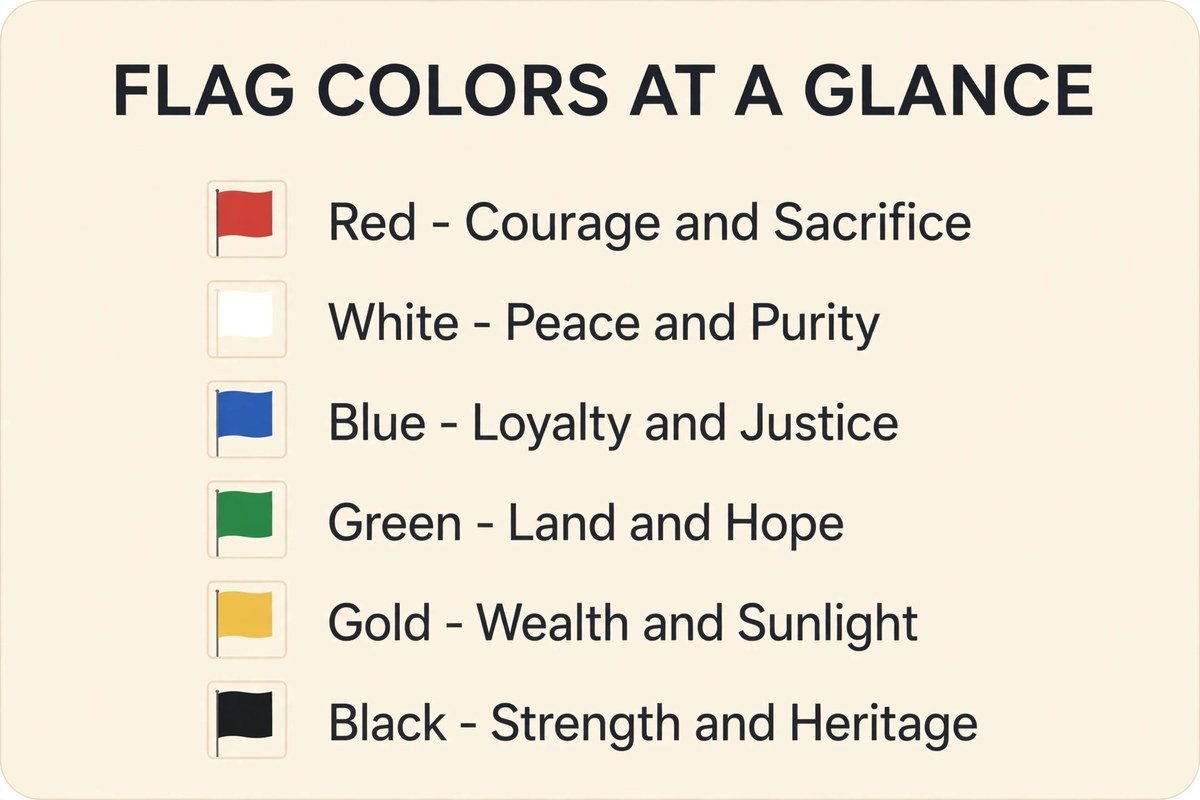
Flag Color Meanings at a Glance
First, here is the quick version of the most widely accepted flag color meanings.
- Red: courage, bravery, sacrifice, revolution, and strength.
- White: peace, purity, honesty, and unity.
- Blue: loyalty, vigilance, freedom, and justice.
- Green: land, fertility, hope, and renewal.
- Yellow and gold: wealth, prosperity, sunlight, and generosity.
- Black: determination, heritage, strength, and mourning.
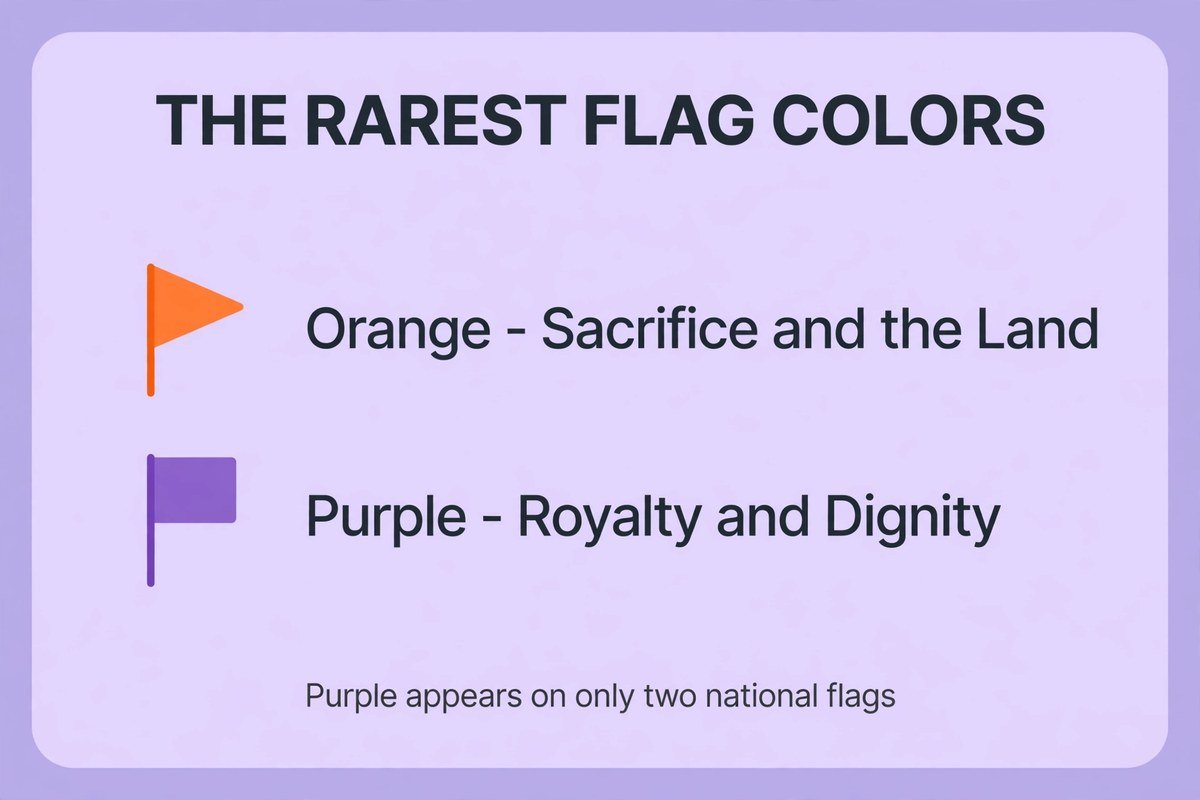
- Orange: sacrifice, courage, and the land itself.
- Purple: royalty, dignity, and luxury.
Keep this chart nearby as a starting point. However, remember the golden rule of flags. A color’s true meaning comes from that flag’s own history.
The Most Common Flag Color Meanings: Red, White, and Blue
Three colors dominate the world’s flags. Together, they appear on the large majority of national banners. Each one carries a heavy load of history.
Red: Courage, Sacrifice, and Revolution
Overall, red is the most common color on national flags. By most counts, it appears on roughly three quarters of them. Above all, red stands for courage and the blood shed for freedom. For instance, Turkey’s red field honors the blood of its soldiers. Similarly, many revolutionary movements raised red banners as a call to rise. In China, meanwhile, red signals prosperity, luck, and celebration. Therefore, red can shout sacrifice in one capital and joy in another. Context, once again, decides the final reading.
White: Peace, Purity, and Truce
Meanwhile, white usually brings calmer messages. Most often, it represents peace, purity, honesty, and unity. The white flag is also the universal sign of truce on a battlefield. Japan’s flag, for example, pairs a white field with a red sun disc. There, white suggests purity and honesty, while the disc shows the sun. In addition, many flags use white to separate stronger colors and calm the design. Overall, white softens a flag and lends it dignity.
Blue: Loyalty, Freedom, and the Sea
Similarly, blue ranks second among flag colors worldwide. Its core meanings include loyalty, vigilance, perseverance, and justice. Moreover, blue often points to the sky or the sea. Greece’s blue stripes, for instance, echo the Aegean Sea that surrounds the country. Island nations use blue for the same reason. In the United States flag, blue stands for vigilance, perseverance, and justice. In short, blue tells viewers that a nation values steadiness and truth.
Flag Color Meanings for Green, Yellow, and Black
The next three colors carry equally deep roots. In fact, whole families of flags share them across continents.
Green: Land, Hope, and Faith
Above all, green speaks of land before anything else. It represents fields, forests, fertility, and agricultural wealth. Consequently, farming nations often place green at the center of their flags. Green also carries strong religious meaning in Islam, where many link it with paradise and the faith itself. Saudi Arabia and Pakistan both fly green proudly. In addition, the Pan-African colors pair green with red and gold. There, green honors the rich land of Africa. Hope and renewal complete the color’s message.
Yellow and Gold: Wealth, Sunlight, and Generosity
Next, yellow and gold bring brightness to any flag. They most often stand for wealth, prosperity, and natural riches. Ghana’s gold stripe, for example, honors the country’s mineral wealth. Similarly, gold can picture the sun and its life-giving energy. Many flags also use yellow for generosity and wisdom. In Buddhist traditions, meanwhile, yellow holds a sacred and humble place. Overall, a golden stripe tells the world that a land is rich, warm, and giving.
Black: Determination, Heritage, and Mourning
Indeed, black carries the heaviest double message of any flag color. On one side, it stands for determination, strength, and ethnic heritage. On the other side, it can mark mourning and the memory of loss. Germany’s black stripe, for instance, is often linked with determination through dark times. In Pan-Arab flags, black recalls early Islamic banners and past struggle. Pirates, in contrast, used black on the Jolly Roger to promise fear. Therefore, black always demands a careful, local reading.
Rare Flag Colors: Orange and Purple
Finally, two colors appear far less often, yet they stand out beautifully. Their rarity makes them memorable.
Orange: Sacrifice and the Land
Orange appears on only a handful of national flags. India’s saffron stripe, for example, stands for sacrifice, courage, and selflessness. Ireland’s orange stripe holds a very different story. There, it represents the Protestant community, facing the green of the Catholic community across a white stripe of peace. Ivory Coast and Niger also fly orange, often linked with the sun and the savanna. In short, orange usually ties a nation to its land and its people’s sacrifices.
Purple: The Rarest Color of All
In short, purple is the rarest color on national flags. Historically, purple dye cost a fortune, because makers extracted it from sea snails in tiny amounts. As a result, only royalty could afford it for centuries. That history cemented purple’s meaning of royalty, wealth, and dignity. Today, only two national flags include real purple: Dominica and Nicaragua. Dominica’s parrot wears purple feathers, and Nicaragua’s rainbow holds a violet band. Consequently, spotting purple on a flag always signals something special.
Flag Color Families Around the World
In addition, many flags belong to color families. Countries in a family share colors because they share history, faith, or geography. Learning the families makes new flags far easier to read.
Pan-African and Pan-Arab Colors
The Pan-African family uses green, gold, and red, often with black. Ethiopia’s ancient banner inspired the set, and Ghana carried it into the independence era. After Ghana, dozens of African nations adopted the same palette as a sign of unity and freedom. The Pan-Arab family, meanwhile, uses black, white, green, and red. Those colors trace back to historic Arab dynasties and revolts. Jordan, Palestine, Iraq, and Syria all fly versions of this scheme. In short, shared colors announce shared identity.
Nordic Crosses and Tricolors
Northern Europe follows a different pattern. Denmark, Sweden, Norway, Finland, and Iceland all place an off-center cross on their flags. The cross reflects the region’s Christian heritage and shared culture. Their colors still vary, though, from Denmark’s red and white to Sweden’s blue and gold. Tricolors form another huge family. France’s blue, white, and red inspired vertical and horizontal tricolors across Europe and beyond. Each adopter kept the layout, yet assigned its own meanings. Consequently, layout shows the family, while colors tell the local story.
Famous Flags and What Their Colors Mean
For instance, real examples lock the lessons in place. Three famous flags show how differently nations use the same palette.
France: Liberty in Blue, White, and Red
France’s tricolor grew out of the Revolution. Blue and red were the colors of Paris, and white represented the king. Joined together, they pictured the people embracing the monarchy under a new order. Over time, French citizens linked the flag with liberty, equality, and fraternity instead. The colors never changed, yet the nation’s story around them kept growing.
The United States: Valor, Purity, and Justice
The American flag received an official color reading in 1782. Charles Thomson, secretary of the Continental Congress, explained the colors of the national seal, and Americans later applied his words to the flag. In his account, white signifies purity and innocence. Red, meanwhile, stands for hardiness and valor. Blue represents vigilance, perseverance, and justice. The thirteen stripes recall the original colonies, and the fifty stars mark the states. As a result, every element carries a counted meaning.
South Africa: A Rainbow of Unity
South Africa adopted its current flag in 1994, at the dawn of its democracy. The design blends six colors into a single forward-pointing shape. Black, green, and gold honor the liberation movements and the land’s wealth. Red, white, and blue recall the country’s earlier Dutch and British flags. Together, the two palettes meet in the middle, picturing different peoples converging on one road. Citizens widely read the flag as unity in diversity, and few flags tell a reconciliation story so clearly.
How to Read the Colors of Any Flag
Reading a flag well takes only a few steps. First, name every color on the flag, including small details in any emblem. Next, recall the common meanings from the chart above. Then, ask what that country itself says about its flag, because official explanations beat general rules. After that, look at the flag’s family. Pan-African, Pan-Arab, Nordic, and tricolor families all share color codes. Finally, check the shapes as well, since crosses, stars, and stripes carry meanings of their own. Our guide to heart color meanings shows how strongly colors speak in everyday symbols too. For a full gallery, the CIA’s Flags of the World reference displays every national flag in one place. In conclusion, colors plus context will unlock almost any flag.
A quick example shows the method at work. Take Ireland’s flag: green, white, and orange in three vertical bands. The chart says green means land and hope, white means peace, and orange is rare. Ireland’s own account adds the human story. There, green represents the Catholic community, orange represents the Protestant community, and white stands for peace between them. Suddenly, three simple stripes describe a whole national hope. That is the power of reading colors with context.
Why the Same Color Means Different Things in Different Countries
New readers often ask why no single dictionary fits every flag. The answer lies in history. Each nation wrote its own story, and it chose colors to match that story. Culture shapes the reading as well. White means purity and weddings in many Western countries. In parts of Asia, however, white traditionally marks mourning. Red means luck and celebration in China, yet it warns of danger in other settings. Religion adds another layer, especially for green and saffron. Therefore, flag color meanings always blend universal symbolism with local memory. Wise readers respect both layers at once.
FAQ’s
What is the most common color on flags?
Overall, red is the most common flag color worldwide. It appears on roughly three quarters of national flags. Blue follows closely in second place.
What do red, white, and blue mean together?
Together, they often signal revolution, freedom, and republican values. France and the United States both fly them proudly. However, each country assigns its own exact meanings.
Why do so many African flags use green, gold, and red?
Those are the Pan-African colors. Ghana popularized them after independence, drawing on Ethiopia’s historic banner. Green honors the land, gold the wealth, and red the struggle.
Which flag color is the rarest?
In fact, purple is the rarest color on national flags. Only Dominica and Nicaragua include it today. Its dye was once so costly that only royalty could afford it.
Do flag colors have official meanings?
Sometimes they do, and sometimes they do not. Some governments publish official explanations, while others grew from tradition.
Conclusion
Flag color meanings turn simple cloth into national storytelling. Red speaks of courage, white of peace, and blue of loyalty. Green honors the land, gold celebrates wealth, and black remembers both strength and loss. Even rare orange and purple carry proud local stories. Together, these colors explain far more than design taste.
Next time a flag catches your eye, read it like a short story. Start with the chart, then add the country’s own history. In short, the colors will do the talking, and now you speak their language.


Leave a Comment