
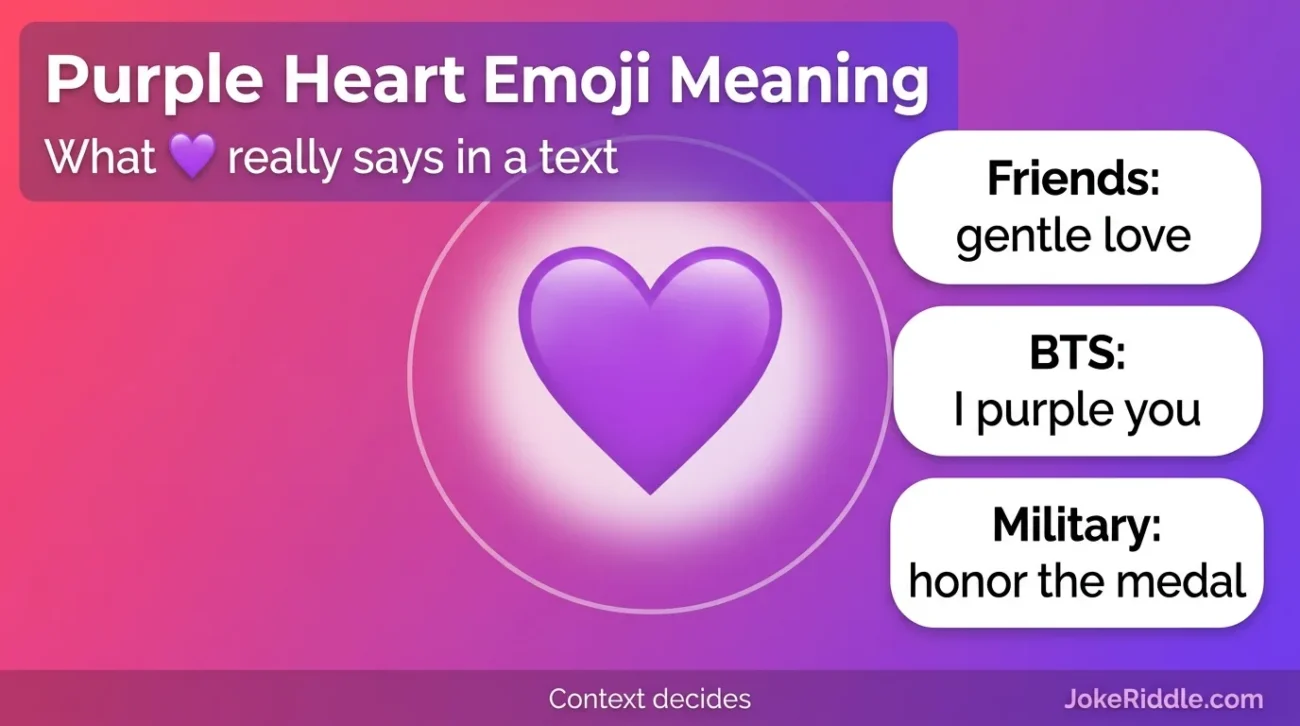
The purple heart emoji meaning is soft, caring love. People send 💜 to show friendship, support, compassion, or a gentle crush. BTS fans use it to say “I purple you,” and in veteran circles it can honor the Purple Heart medal. Context decides which one you got.
You opened a message and found a lone 💜. No words, no explanation, just a purple heart sitting there like a cat that just knocked a cup off the counter. Now you want the real purple heart emoji meaning before you reply.
Good news: this one is gentle. It rarely signals anything dramatic. It does wear a few different hats, though, so the sender, the chat, and the emojis around it all matter.
Here you’ll see what each reading looks like, how 💜 compares with ❤️ and the black heart emoji meaning, and how to answer without making it weird. Purple also carries a dreamy mood, which the ethereal meaning guide explores. If you decode texts a lot, our SMD meaning and DBA meaning posts are worth a look too.
What Does the Purple Heart Emoji Mean in a Text?
At its core, 💜 says “I care about you.” It sits between a friendly wave and a full red-heart confession. That middle spot is why people love it. It warms a message without making the moment heavy.
Most senders use it in one of five ways. They show friendship, offer comfort, cheer for a fandom, honor a veteran, or add a soft flirty note. The sender and the conversation decide which one applies.
The color helps explain the spread. Purple has long stood for royalty, spirituality, and creativity in many cultures, so a purple heart often feels warm, a little dreamy, and a little special. Emoji dictionaries tag it with words like love, compassion, and understanding. Some people also use it to show support in awareness campaigns, such as domestic violence awareness.
The emoji itself is not new. Unicode approved it in 2010 as part of Unicode 6.0, and it joined the standard emoji set in 2015. Its code point is U+1F49C. None of that history hides a secret code. The meaning grew from how people use it every day.
Purple Heart Emoji Meaning in BTS and K-Pop Chats
Scroll through any K-pop fan page and you’ll see 💜 everywhere. The reason goes back to 2016, when BTS member Kim Taehyung, known as V, coined the phrase “I purple you” to tell fans he loved them. The Korean version is borahae. The band’s fandom, ARMY, adopted purple as its color, and the heart became its signature symbol.
In this world, 💜 means love, loyalty, and “I’m in this with you.” Fans drop it under concert photos, in birthday wishes for band members, and at the end of goodnight tweets. It also works as a quiet handshake. When one fan sees 💜 in another fan’s bio, they know they’ve found their people.
Outside fan spaces, the BTS meaning usually fades. A coworker who sends you 💜 almost certainly isn’t announcing a fandom. Still, if the message mentions a concert, an album, or “ARMY,” read it as fan love and reply in kind.
Purple Heart Medal vs. the 💜 Emoji
The emoji has a second, more serious life. The Purple Heart is a U.S. military decoration for service members wounded or killed in action. People sometimes post 💜 to honor that medal, especially around Veterans Day, Memorial Day, and tributes to fallen soldiers.
Tone is your clue. A veteran’s profile, a memorial post, or a message that mentions service points to the medal. A selfie caption or a “miss you” text does not. Treat the military reading with respect, and don’t joke about it in those threads.
Purple Heart Emoji Meaning From a Friend, a Crush, or a Guy

Most 💜 texts come from people you know. Reading them gets easier when you sort by relationship.
From a close friend. Expect warmth with no strings. Your friend is saying “proud of you,” “thinking of you,” or “I’m here.” You’ll see it after good news, bad days, and long group-chat nights.
From family. Parents, siblings, and cousins use 💜 as a soft sign-off. It reads like a hug in text form.
From a crush. Here the emoji turns slightly flirty. It says “I like you” in a way that leaves room to retreat. Look at the rest of the message. If the 💜 follows “miss you” or “can’t stop smiling,” the signal gets stronger.
From a guy or a girl you’re dating. A partner might use 💜 instead of ❤️ to sound sweet and low-pressure, and some couples pick it as their own special heart. The clue is consistency. One purple heart in a casual chat means little, while a steady stream of 💜 with plans and compliments points to real interest.
From a Gen Z friend. Many younger users treat colored hearts as a mood palette. Purple lands in the calm, affectionate zone. It rarely carries the weight of a red heart.
One rule saves you every time: judge the emoji by the relationship, not the other way around.
Purple Heart vs. Red Heart and Other Color Hearts
Heart colors work like volume knobs. ❤️ is the loud, serious one. 💜 turns the dial down to warm and friendly.
The black heart sits at the other end of the mood spectrum. It leans toward dark humor, grief, or edgy style, and our black heart emoji meaning guide breaks it down. Put the two side by side and you can see why 💜 feels safer for everyday texts.

Funny Purple Heart Emoji Meaning Jokes
The purple heart has a built-in personality, so the internet jokes about it constantly. Here are a few originals you can send back.
- Red heart says “I love you.” Purple heart says “I love you, but I’m keeping my snacks.”
- Why did the purple heart win the group chat? It always knew when to say “I’m here” without writing a paragraph.
- A red heart walked into a bar and said, “I’m in love!” The purple heart said, “Same, but in a cozy, matching-sweaters way.”
- Sending 💜 is the emoji version of a warm blanket. It’s soft, it helps, and no one has to sign a contract.
- Group chat rule: if someone says “rough day” and you have zero advice, send 💜. It’s a hug with no calories.
Riddle: I’m not red, so I’m not shouting. I’m not blue, so I’m not sad. I show up when you care but don’t want to make it weird. What am I?
Answer: The purple heart emoji.
How to Reply to a Purple Heart Emoji
You don’t need a speech. Match the energy and keep going.
A friend deserves a 💜 back, or add a line like “you’re the best.” After a comfort text, try “thank you, that helped” with a heart. BTS and fandom chats work best with 💜 plus a shared moment, such as your favorite song. Your crush needs a warm reply, so mirror the heart and add a small question to keep the chat alive. Veteran tributes call for a short, respectful note, such as “thank you for your service.”
Skip the overthinking. A purple heart is almost never a trap.
Why Your Purple Heart Looks Different
Every platform draws its own version of 💜. Apple, Google, Samsung, and Microsoft all use slightly different shades and shapes. Older phones had even stranger quirks. Emojipedia notes that Android 4.4 once showed this emoji as a pink heart, so some senders may have meant purple while their friends saw pink. The code behind it is the same, and only the artwork changes.
Related Meanings
Want more decoding help? Try these guides:
FAQ
Is it okay to send 💜 to a coworker?
Yes, in a casual chat. It reads as friendly appreciation. Save it for teammates you already joke with, and skip it in formal emails or messages to senior leaders.
What do two or three purple hearts mean?
Extra hearts usually add emphasis. 💜💜💜 feels warmer and more excited than a single 💜, much like adding extra exclamation marks.
What does 💜 plus 🤗 mean?
Together they usually signal sympathy or comfort, like a hug sent over text. People use the pair after bad news or a rough day.
Is the purple heart the same as the purple circle 🟣?
No. The purple circle is a plain colored shape with no heart meaning. It can mark purple items, teams, or categories, while 💜 carries affection.
Can 💜 mean different things in different countries?
Color symbolism can shift by culture, so the same heart may feel more formal or more casual in different places. When you chat across cultures, add a few words so your message lands the way you intend.
Conclusion
The purple heart emoji meaning comes down to gentle, caring love. Friends use it to show support, fans use it to say “I purple you,” and veterans’ communities use it to honor the medal. Read the sender and the setting, and the answer usually shows itself. When in doubt, send a 💜 back with a kind word, and you’ll be fine.


Leave a Comment